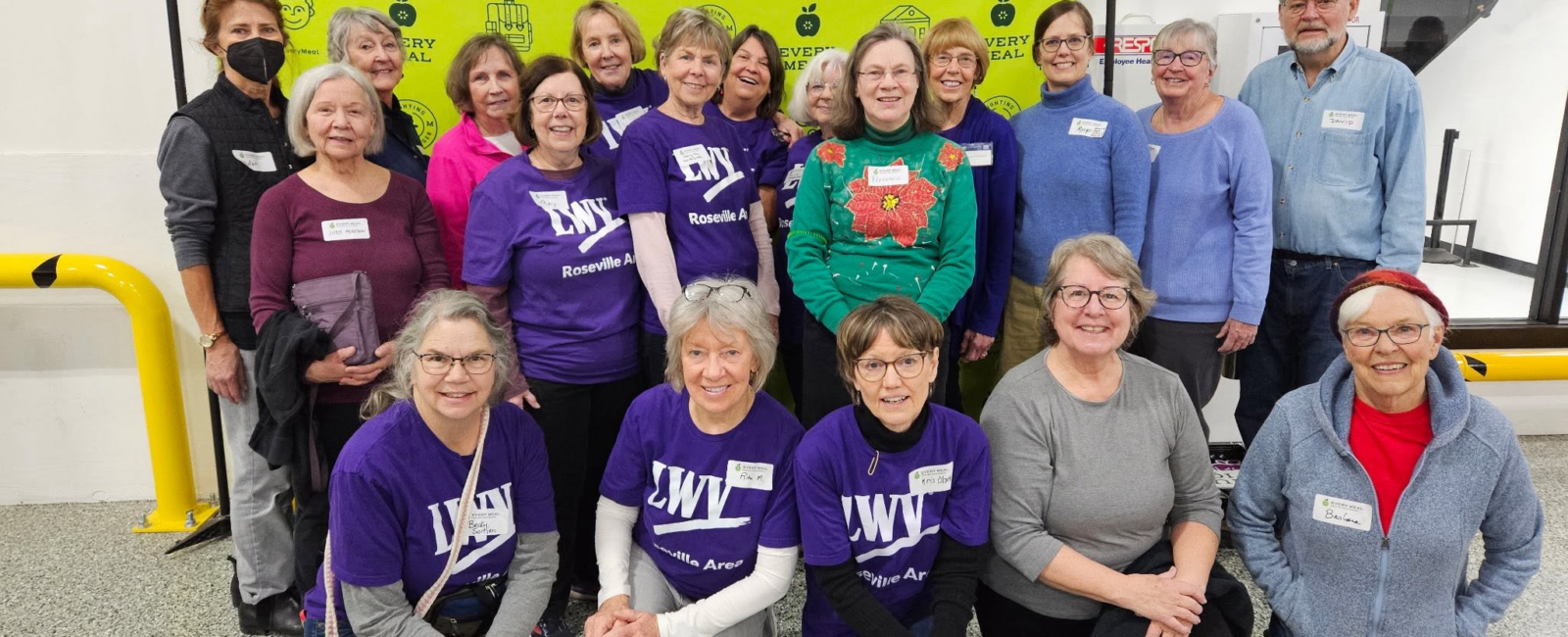
Credit: League of Women Voters of Roseville Area on Facebook
The LWV of the Roseville area is rooted in the history of the community as well as the continual movement to preserve voting rights
By Margo Bock and Holly Swiglo — Vice President & Officer At-Large, League of Women Voters – Roseville Area
The League of Women Voters (LWV) is a nonpartisan, grassroots organization dedicated to protecting and expanding voting rights, empowering voters, encouraging civic participation and defending our democracy through advocacy, education and litigation at the local, state and federal levels.
The LWV was born out of the suffrage movement to continue to promote voting rights and empower voters. The LWV strives to build “a democracy where every person has the desire, right, knowledge and confidence to participate.”
Born in a growing community
The League of Women Voters Roseville Area (LWVRA) began with 23 members in 1953, shortly after the incorporation of the village of Roseville. Members wanted to have an impact on the decisions being made as their community developed.
The Maplewood and Falcon Heights Leagues merged with Roseville’s a few decades later. Today, the LWVRA includes Lauderdale, Little Canada and North St. Paul, as well. The LWVRA currently has over 175 members and is growing rapidly, with nearly 30 new members joining within the past year.
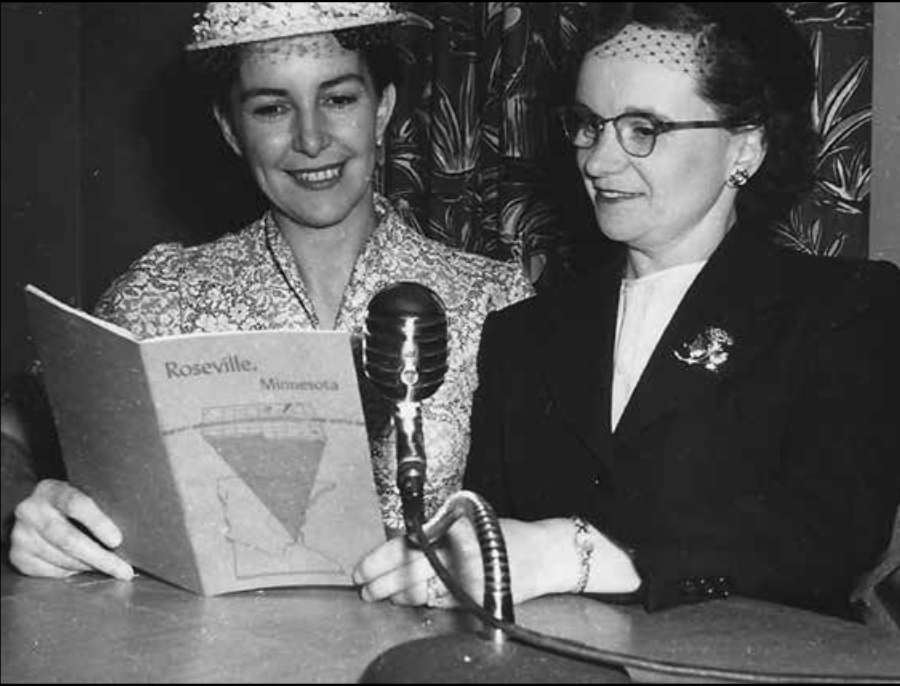
In the early years, LWVRA members successfully advocated for expanding and improving parks, addressing gender bias in schools, reforms to the city government to increase representation, improved juvenile justice systems, pay equity, youth counseling services and fair and affordable housing. They took a data-driven approach to their advocacy, based on member-conducted studies.
More recently, the LWVRA has advocated for organized trash collection in Roseville, which reduces greenhouse gas emissions and increases community safety, and improved police training to better support diverse communities and people with mental health challenges. LWVRA members also continue to advocate for affordable housing in our community.
On the elections side, the LWVRA has a long history of hosting candidate forums, informational public meetings, voter registration drives and get-out-the-vote campaigns, as well as publishing voter guides and election-related articles.
Getting out the vote
Minnesota has long been one of the nation’s top states for voter participation.
Data from the Minnesota Secretary of State’s Office shows high local turnout, as well. In the 2024 general election, Roseville’s overall turnout rate was 89.6%. This is well above both Ramsey County’s county-wide figure of approximately 86.1% (279,414 estimated voters out of 324,461 registered) and the statewide Minnesota rate of 76.35%.
With county percentages across Minnesota ranging from 59.9% to 88.6%, Roseville sits near the very top of that range, reflecting a community with deep civic habits.
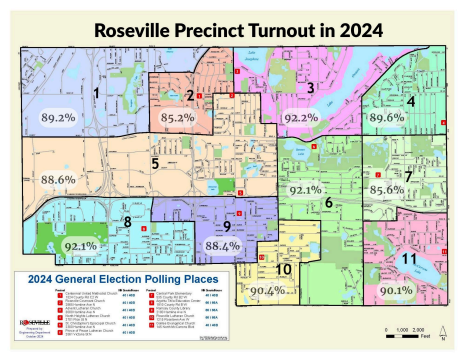
While those participation numbers look great, they don’t tell the whole story of democratic engagement. It’s worth noting that an estimated 76.5% of eligible citizens voted statewide and 71.6% Ramsey residents voted countywide, a number that uses Census-based data. Those numbers reflect total votes statewide divided by a total estimated 18+ citizen population. The real participation rate could be a bit lower in Roseville, but because the precise count of unregistered eligible residents at the precinct level is not available, it’s unknown by how much.
The city’s 11 voting precincts tell a nuanced story. Turnout ranged from a high of about 92% in Precincts 3, 6, and 8 down to roughly 85% in Precincts 2 and 7.
Barriers to voting persist
Many populations face disproportionate barriers when it comes to voting. People with disabilities may not be able to physically access polling sites or complete absentee ballots. Those who lack transportation might not be able to make it to the polls or even mail their ballots. Communities of color often have fewer polling locations with shorter hours, making it even more difficult for working parents in these communities to find the time to vote.
People with language barriers may not have access to critical information on how to register to vote and those of lower incomes might not be able to afford an ID in states that require it. Voter ID laws can also make voting difficult for transgender people if their ID does not match their gender identity.
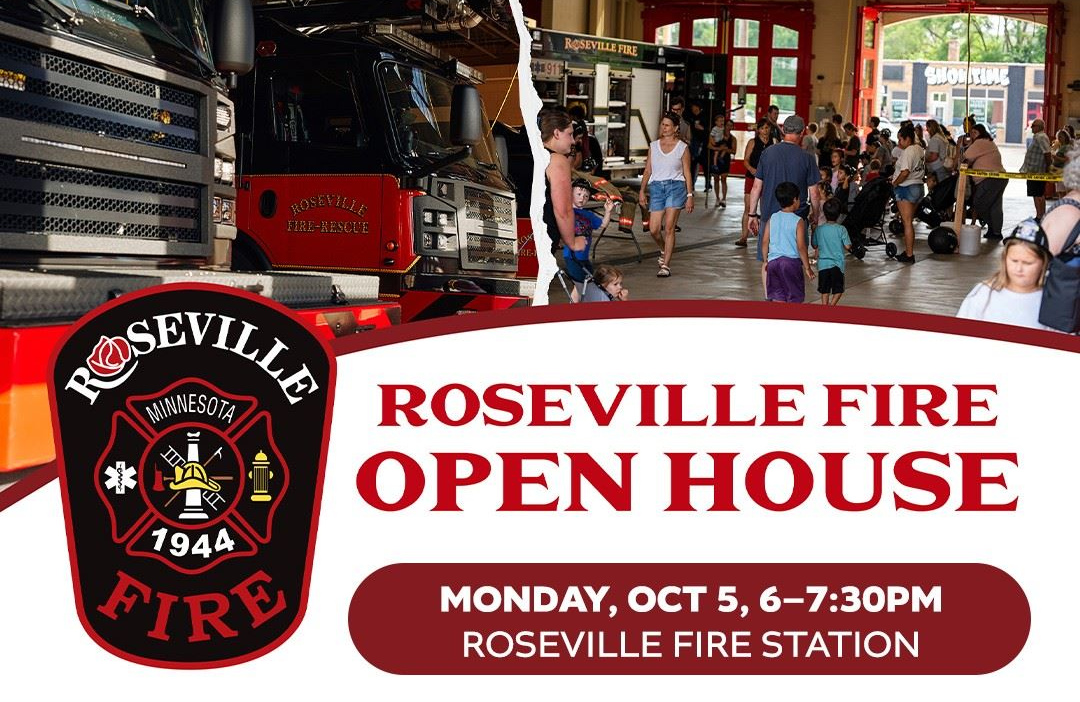
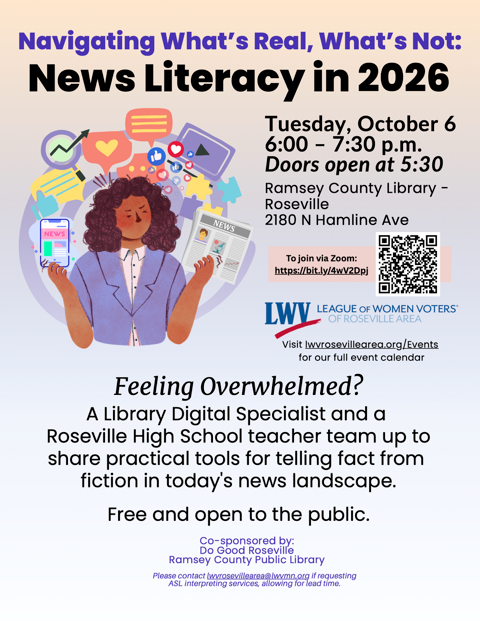
LWVRA’s 2026 voter outreach plan includes summer city festivals, Keystone Family Services, farmer’s markets, apartment buildings, libraries and high school events. Candidate forums and civic education programs will happen in the fall.
Check out the LWVRA website where you will find links to the pocket-sized voter info zine, event calendar, important voting updates and social media channels.