
Nine months after its passage, many restaurants have already made the switch to sustainable packaging, putting in the extra work towards a more sustainable city.
by Sommer Wagen
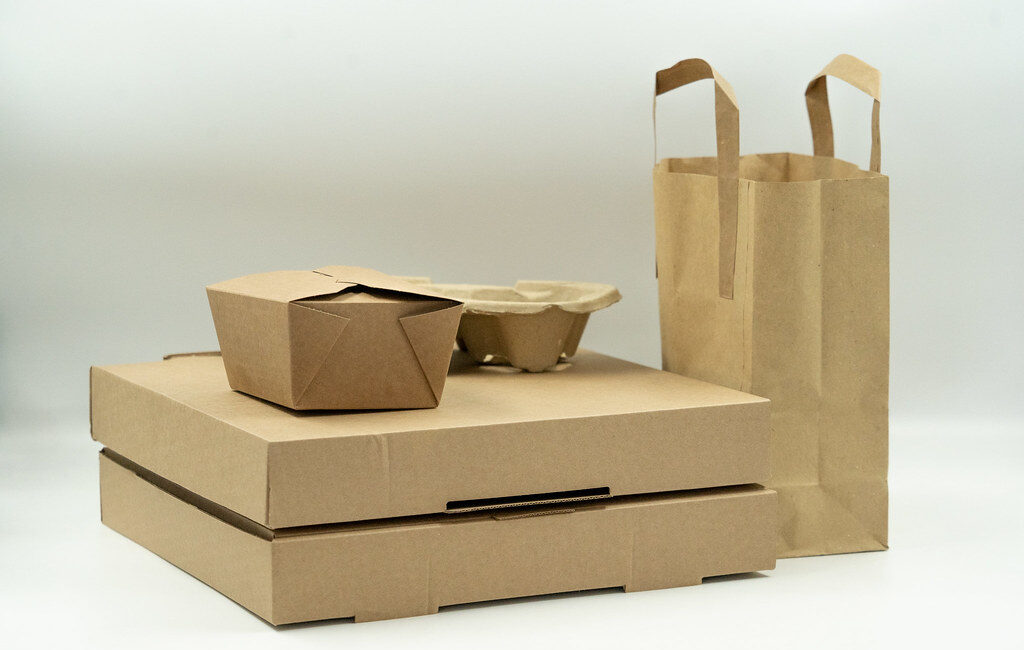
Last October, Roseville became the latest city in the Twin Cities metro to pass a Green to Go ordinance, mandating that all food establishments only use food packaging that is compostable, reusable or recyclable.
Nine months after its passage, city of Roseville sustainability specialist Noelle Bakken said it is already making a difference, with 17% of Roseville restaurants already fully compliant and 32% partially compliant.
“So far it’s been a good experience,” Bakken said. “I’m very happy with being at 17% early on, and we haven’t even met with all of the restaurants yet.”
Bakken said education and outreach have been this year’s focus regarding the ordinance, since enforcement doesn’t begin until Jan. 1, 2026. The effort has involved flyering and short meetings with restaurants to facilitate the transition by connecting them with county-level resources.
Once enforcement begins, Bakken said she will check in with each restaurant annually for compliance and that non-compliant restaurants will have 60 days to get back into compliance, after which they will be fined $100.
Bakken clarified that communication and collaboration will still be the goal, not punishment.
“I’ve been very clear with restaurants that our goal with this is not to fine them, it’s just to try to work with them to help bring them back into compliance and make sure they’re using the best materials that they can,” she said.
Another outreach strategy Roseville utilized was a packaging fair that took place on July 28, co-hosted with the city of St. Paul. Minneapolis held their own fair when the city passed its own Green to Go ordinance ten years ago in order to provide resources to restaurants all in one place.
“It was a very collaborative effort,” Bakken said. “Cities don’t usually have a ton of resources so we like to get out there and share as much as we can.”
Makwa Coffee: the extra work makes a difference
Makwa Coffee owner and founder Jamie Becker-Finn said the coffee shop has been going “above and beyond” Green to Go’s requirements since first opening in 2022.
“I knew from day one that I didn’t want to be part of putting excess plastics into the world and contributing to global pollution in that way,” she said.
Becker-Finn, a member of the Leech Lake Band of Ojibwe, said she saw a need for an independent, non-corporate coffee place in Roseville where people could build community post-COVID. She said the name Makwa, which means “bear” in the Ojibwe language, speaks to the suburban Indigenous community that is often overlooked.
Makwa’s to-go packaging has always been fully compostable, and a BizRecycling grant from Ramsey County helped fund their three stream garbage bins. Furthermore, the business pays for its own composting and special orders compostable garbage bags that are ten times the price of plastic.
“If you’re not putting packaging materials into the industrial compost stream, they’re still just going to rot in a landfill,” Becker-Finn said. “There’s extra work involved in making sure this system actually functions.”
In that light, Becker-Finn said the extra work businesses put in to comply with Green to Go is absolutely worth it, and that Makwa shows how even small businesses can still do that work successfully.
“We’ve been really up front since day one with our customers that we use compostable materials, so their stuff is gonna cost a little more,” she said. “But the community has been very supportive, and the more people buy [compostable materials,] my hope is that the price will go down.”
Photo courtesy of Flickr.