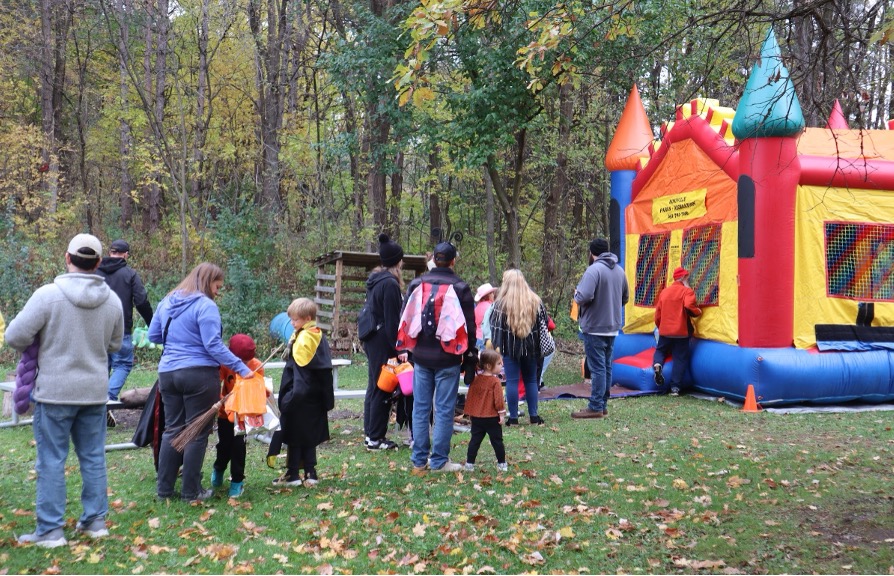

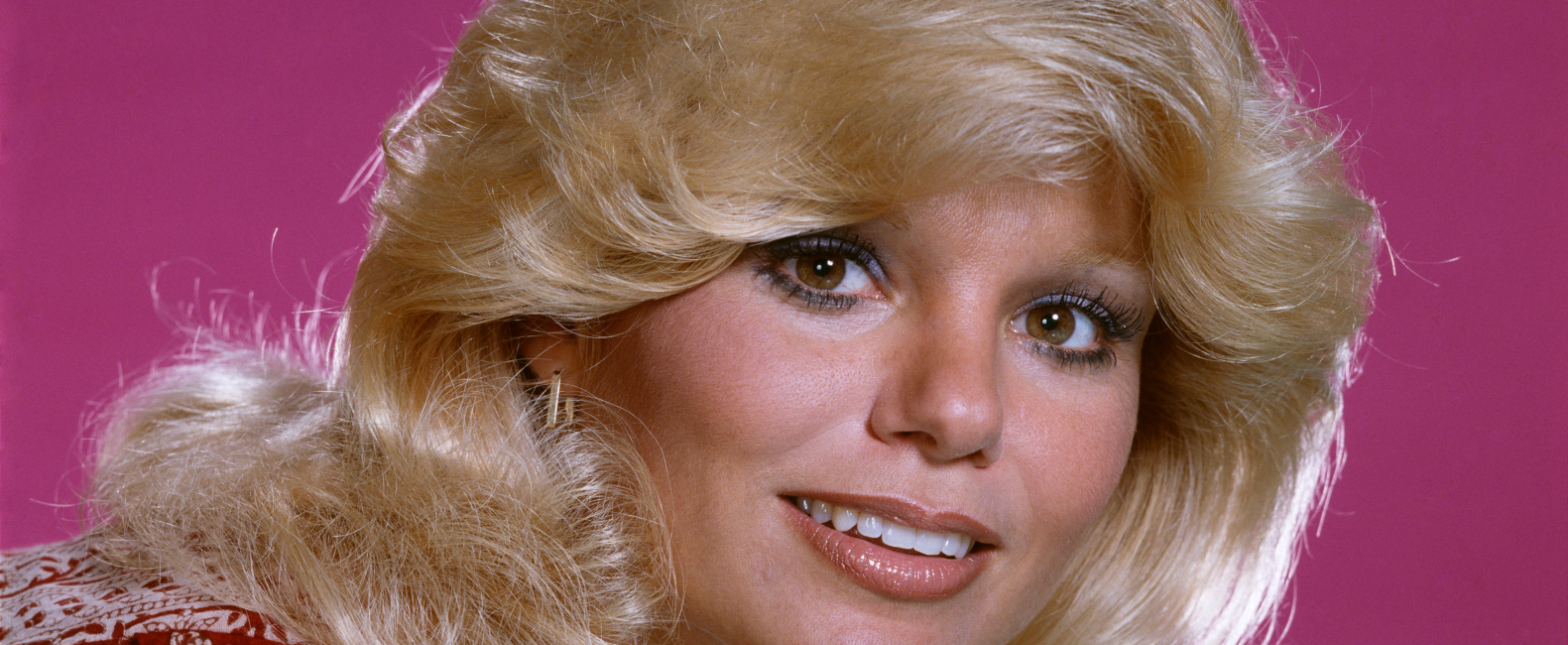
Anderson in 1978. Image credit: CBS via Getty
Recognizing the Emmy-nominated actress who quashed stereotypes and did things her way
By Sommer Wagen
As Women’s History Month comes to a close, the Roseville Reporter would like to recognize the women who have come from and shaped our community. One such woman is actress Loni Anderson, best known for her role as receptionist Jennifer Marlowe on the sitcom “WKRP in Cincinnati,” which ran from 1978-1982.
Anyone familiar with Anderson’s portrayal of Marlowe knows that Anderson sought to subvert the “dumb Blonde” stereotype, infusing the character with dry wit, clear boundaries (“I don’t make coffee and I don’t take dictations”) and dangling her sexuality in front of her overzealous male co-workers.
Anderson, who passed away on Aug. 3, 2025, broke into acting with her looks, with “WKRP” creator Hugh Wilson later saying that she was hired for the Marlowe role “because her body resembled Jayne Mansfield’s and possessed the innocent sexuality of Marilyn Monroe,” per Yahoo! News. However, Anderson initially refused the role because of its stereotypical writing.
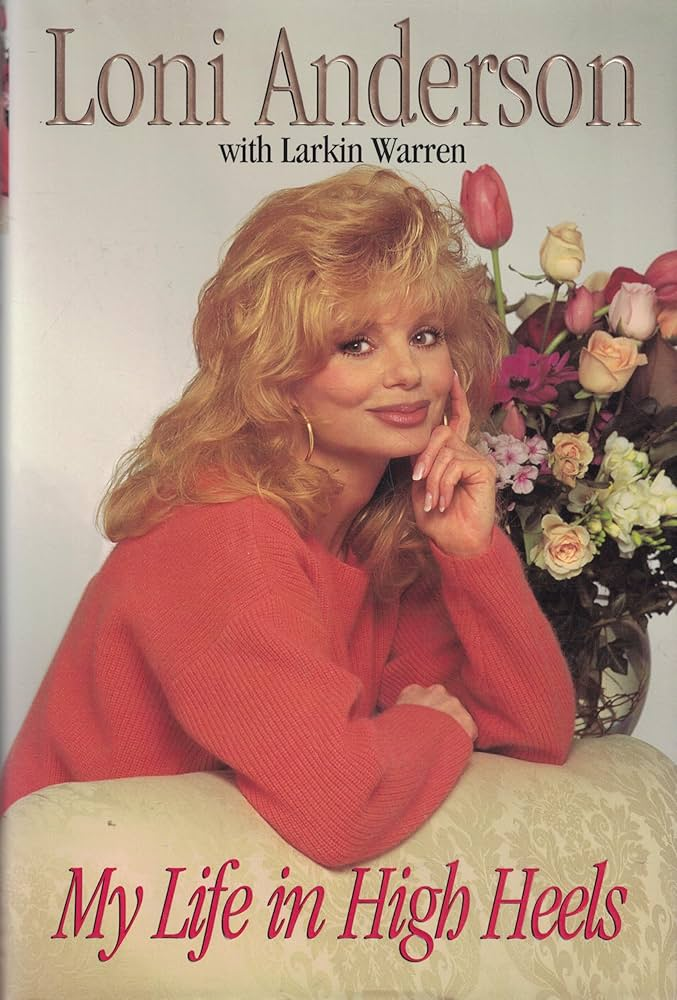
“‘I’ve already read [the “WKRP in Cincinnati” script]. It’s window dressing. [Jennifer Marlowe] is just another bimbo, and I won’t play that anymore,’” she recalled telling her agent in her 1995 memoir, “My Life in High Heels.” “‘I’m playing not-so-nice girls now, smart girls, devious girls, and I’m getting some attention here. I’m not going back to bimbohood!’”
It was that insistence on playing Marlowe with nuance that landed her what became her breakthrough role.
“By the second episode, Jennifer Marlowe was acerbic, smart and aware. And [“WKRP” director] Jay Sandrich came back afterward and said, ‘I’m sorry. I was wrong,’” she wrote.
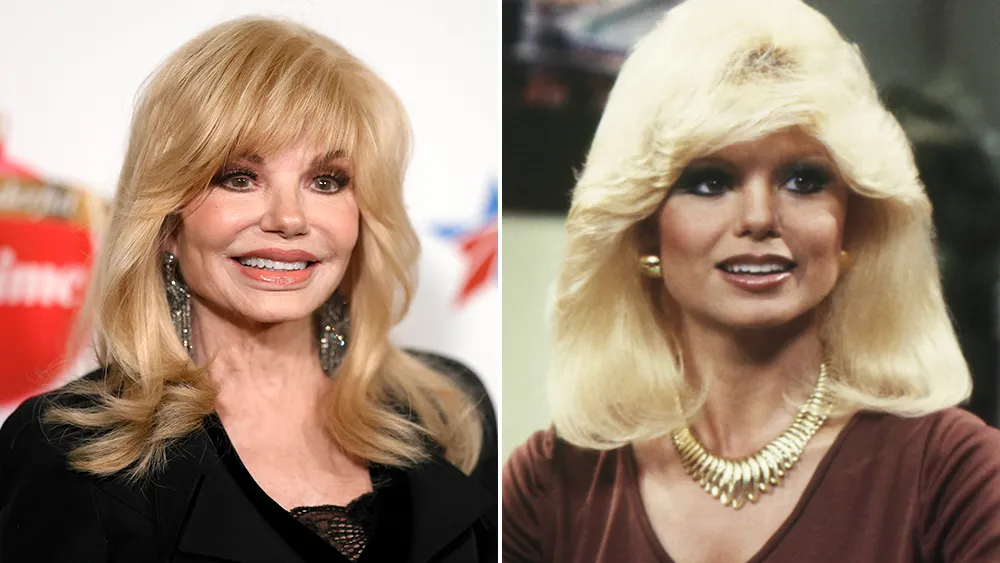
Beyond her trailblazing acting, Anderson’s life reflected those of countless women, from being defined by her looks, young (and unplanned) motherhood, experiences of domestic violence and being silenced by the men in her life. Still, Roseville’s own managed to consistently do things her way.
Recognition for her looks paved her path
Born on Aug. 5, 1945 in St. Paul, Minn., Anderson grew up in Roseville and attended Alexander Ramsey High School, now Roseville Area High School. Spurred on by her mother, she started modeling in her early teens for various advertisements, and she was recognized for her looks. During her senior year at Ramsey High in 1963, she won Queen of the Valentine’s Day Winter Formal.
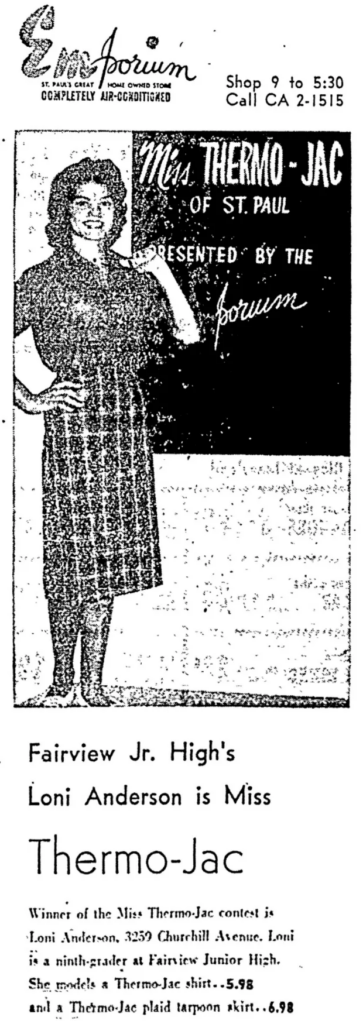
Beauty pageants allowed Anderson to pay her way through college at the University of Minnesota, and she was crowned Miss Roseville in 1964. She finished first runner-up to that year’s Miss Minnesota, Barbara Hasselberg.
Not long after, Anderson hastily eloped with Bruce Hasselberg— brother to Miss Minnesota— and unexpectedly became pregnant. The whirlwind marriage had quickly become destructive, with Hasselberg and Anderson frequently and intensely arguing. When the then 19-year-old Anderson sought a divorce, the judge refused to hear her petition because, “‘Pregnant women aren’t in their right minds.’”
Anderson replied, “‘And you know this because the last time you were pregnant, you were not in your right mind?’”
And so, Anderson couldn’t get a divorce until her daughter, Deidra, was born. Still, she pursued single motherhood with immense work ethic, re-enrolling in school and taking modeling gigs to support herself and her daughter.
After getting involved with the theatre department, she discovered her love of acting and decided to pursue it as a career. Her first stage role was in Roseville Little Theatre’s 1963 production of “Two Dozen Red Roses,” and she made a name for herself at local venues like Chanhassen Dinner Theatre and Friar’s Dinner Theatre in Minneapolis.
Sexism took public, personal tolls
Throughout her career, Anderson contended with men close to her who resented her for her success. After she and her second husband Ross Bickell moved from Minnesota to Los Angeles and she got her big break on “WKRP,” she attested in her memoir to his frustration, as well as the double standard celebrity couples are held to.
“Hollywood success was supposed to happen for Ross. We both thought so. And if it had, I think I could have made my peace with that. Women do so all the time,” she wrote. “But when it didn’t happen for him— and when what did happen to me became so huge— Ross began to think that the town had turned on him. Everywhere he went he was Mr. Loni Anderson. He started hating Los Angeles. And it began to feel like he didn’t like me much, either.”
The pattern continued during her brief relationship with “WKRP” co-star Gary Sandy after she and Bickell divorced. When Anderson was nominated for an Emmy in 1981 and Sandy wasn’t, Anderson said he got upset that she told him about her nomination first.
‘“Uh, wait a second. You mean I’m not allowed to be excited about being nominated, just because you weren’t?’ Gary got so mad he stomped out of the house,” she wrote.
Despite the pushback from men she was involved with, Anderson continued to work and make a consistent name for herself in Hollywood.
Her most tumultuous relationship was with Burt Reynolds, which lasted 12 years, including a five-year marriage. In her memoir, Anderson details his moodiness spurred by drug addiction, on top of emotional and physical abuse and infidelity. In 1993, Reynolds served her with divorce papers under false pretenses of reconciliation, according to the memoir, starting a media frenzy and smear campaign against her that destabilized her life for months.
“It was as though the only way to make his affair OK— the only way to justify throwing me out— was to make me the bad guy,” she wrote.
She later said in interviews that Reynolds would tell her that no one would believe her about the abuse “because he was Mr. Wonderful and the world loved him,” reflecting a too-common circumstance of abuse survivors.
Still, Anderson acknowledges throughout her memoir the nuances of abusive relationships and of being with people suffering from addiction, showing how she dealt with harrowing circumstances with wisdom, grace and heart.
“I’ve always been very disciplined, both physically and emotionally. No matter what, I soldier on. Maybe it’s that Midwestern Lutheran thing, but whatever it comes from, I’ve always been grateful for it,” she wrote.
What all women want
Anderson wanted what all women do— to be loved and to do what she loved. The road towards achieving those things was not the smoothest, but her strategy of following her heart and doing things her own way kept her on that path.
As it says on the back of her memoir: “I’ve made all the same messes. I just made most of mine in public. In high heels.”
Anderson will always be an iconic Rosevillian. We’re proud that such an independent and inspiring woman was one of our own.