“Curious Allies”explores the unusual relationships of nature’s curious allies
By: Kinsey Gade
Lede: On Sept. 27, the Bell Museum welcomed the traveling exhibit, “Curious Allies: Exploring Relationships in Fungi, Parasites, and Carnivores,” which explores the collaborations in fungi, parasites and carnivores.
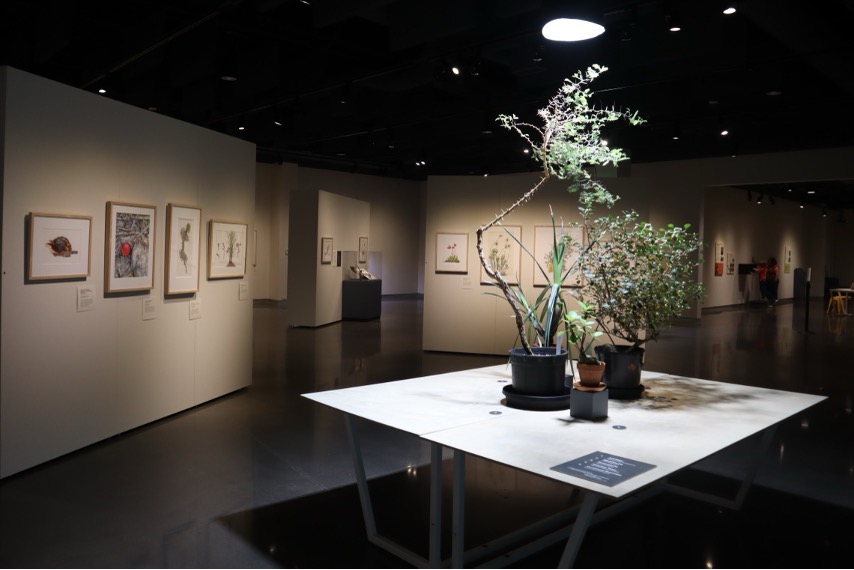
The museum collaborated with the University of Minnesota’s College of Biological Sciences Conservancy and the Bell Museum’s herbarium to display live plants and a pressed plant collection alongside art pieces, according to Scarlet Fitzsimmons, the gallery programs coordinator. For kids, the museum added interactive demonstrations about lichens, a hybrid partnership between bacteria, algae and fungi, and their positive influence on air quality.
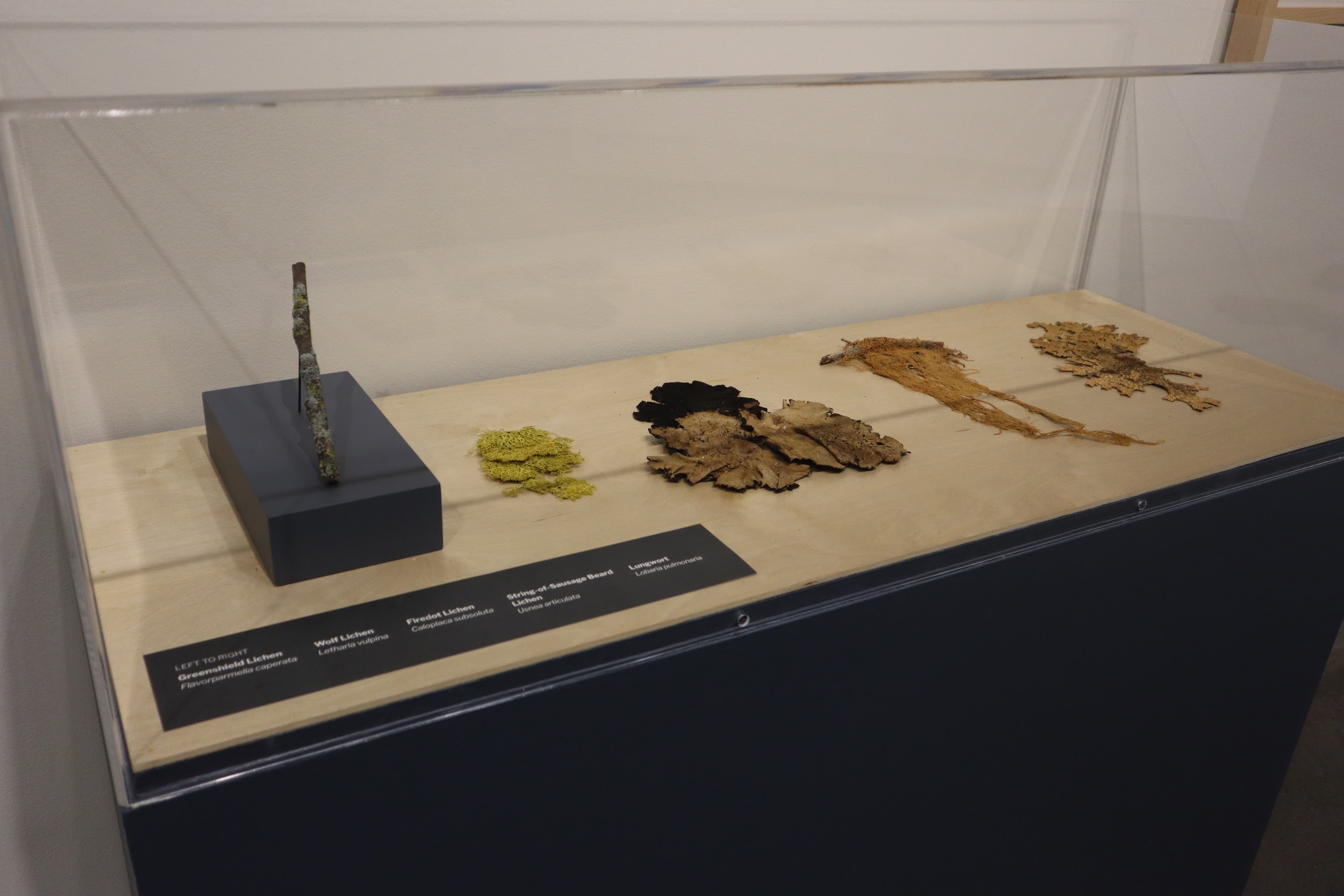
Caption: Lichen specimens on display in “Curious Allies.” From left to right: greenshield lichen (Flavoparmelia caperata), wolf lichen (Letharia vulpina), firedot lichen (Caloplaca subsoluta), string-of-sasuage beard lichen (Usnea articulata), lungwort (Lotharia pulmonaria).
Will Sullivan, an interpretive guide and University of Minnesota senior biology student, said the exhibit’s artistic elements have made it one of his favorites to work with.
“I think the art is very cool, but it’s a bit different than other exhibits we have had before because we have two sides of the exhibit, the art-focused one and the interactive one,” Sullivan said.
Produced by the American Society of Botanical Artists, the exhibition was originally displayed at the New York Botanical Garden and has since traveled throughout North America, according to Fitzsimmons. The Bell Museum exhibit highlights the work of two Minnesotan artists in the show, Linda Powers and Janet Goltz.
Fitzsimmons said the goal is to showcase the art and create connections between the community and the University.
“Our biggest takeaways as an exhibit are getting people, kids, to understand and be more curious about the observation of the natural world and getting excited about it,” Fitzsimmons said.
Caption: Art featured in “Curious Allies.” Photo by Kinsey Gade
The museum’s Funky Friends Program, which includes additional activities in which people can “meet weird cousins of the non-animal kind” as well as crafts related to the exhibit, will be held from Oct. 15 to Nov. 2, according to Fitzsimmons.
The museum will also be holding a Collectors Day event on Nov. 1, showcasing community members’ personal scientific collections to the public.
“Curious Allies” is on view from Sept. 27 to Jan. 4 at the Bell Museum, 2088 Larpenteur Ave W, St. Paul, MN 55113
Bell Museum hours of operation are Wednesday through Sunday from 10 a.m. to 4 p.m.
Tickets starting at $12.
Free admission for Bell Members and University of Minnesota students.
Bell Museum Website: https://www.bellmuseum.umn.edu/
To purchase tickets, visit https://www.bellmuseum.umn.edu/admissions/ or call the museum at (612) 626-9660
SOURCES:
Scarlet Fitzsimmons – scarlet@umn.edu
Will Sullivan – sull1141@umn.edu
Bell Museum – https://www.bellmuseum.umn.edu/exhibits/
New York Botanical Garden – https://www.nybg.org/