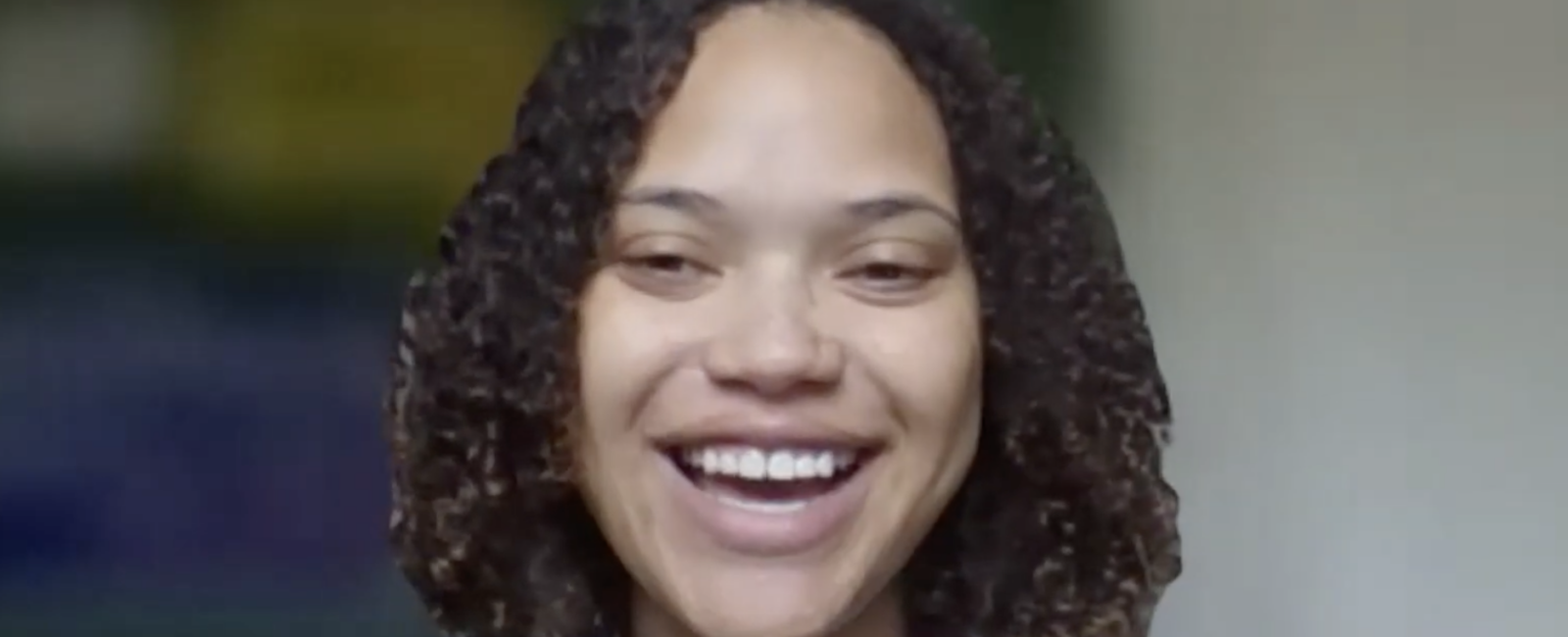
Sen. Oumou Verbeten spoke to the Roseville Reporter about this past session, being a new mom as a legislator during Operation Metro Surge and her goals for next session and her re-election campaign
By Sommer Wagen
Sen. Clare Oumou Verbeten represents her hometown of Roseville as a senator for District 66. Now living in the Como neighborhood of St. Paul, she spoke to the Roseville Reporter about how growing up in Roseville and being a new mother shapes her goals as a legislator and her campaign for re-election.
Watch the interview read the transcript below. Responses have been edited for length and clarity.
What would you say were the highlights of this past session?
I think this session, the highlight for me was definitely the Senate rules change effort that I led with a bipartisan group of moms.
I became a mom last year, my son Leo is now 10 months old, and was a little bit younger during session. I had a day where he was sick and I couldn’t bring him into daycare, so I just brought him with me to work. I was aware that this rule was in place where kids weren’t allowed on the Senate floor, but I tried bringing him on anyway and was actually kicked off. And, you know, the Minnesota House has allowed kids on for several years now. There’s been a lot of moms in the Legislature who have done it, but it’s been difficult, particularly in the Senate, because of this rule.
So right away, it was a group of moms, Sens. Erin Maye Quade (DFL-Apple Valley), Amanda Hemmingsen-Jaeger (DFL-Woodbury), Liz Boldon (DFL-Rochester), Alice Mann (DFL-Edina) and then Julia Coleman (R-Waconia), our colleague across the aisle, we were like, “This is ridiculous, and we’re going to change this this year.”
It wasn’t a law that we needed to pass, just rules that govern our own bodies. We made that change and it was an important one— I think it’s going to allow more women to serve in office.
What work did you do within your committee assignments?
I serve on four different committees. I’m the vice chair of the Senate Judiciary and Public Safety Committee. I also serve on the Education Finance, Higher Education and Labor Committees.
I’d say there’s two highlights of bills that got done this year for me. I have been a champion for crime victim services funding— that’s under the Judiciary and Public Safety budget— and that funds things like our domestic violence centers, advocates who attend court with victim survivors, who help children go through interviews, support our survivors of sexual assault through examinations, all of that really important work. They’ve been facing a crisis in funding due to federal cuts for several years. We identified the specific gap for just this year was $12 million and we were able to secure that amount for crime victim services. We still need more and we need to figure out a long-term funding source because we’ll have a new budget cycle next year, but that was a really important win thanks to the coalition that we worked on.
Then in higher education, I worked with a group of student parents— which is, again, really near and dear to my heart being a new parent myself— who talked about the kind of barriers they face. It’s really difficult when it’s time to register for classes and things fill up quickly and they’re navigating their child care schedules and work and all these things, so they were looking for priority registration. Some campuses already do that, but there wasn’t really a uniform system. And so they brought that bill forward and we got that passed this year. So now our student parents at any college or university in Minnesota, that includes our public and private institutions, can know that they’ll have priority registration.
What would you say were some of the challenges of this session?
The two that come to mind are bills that we passed in the Senate that just could not get passed— voted on, even— on the House floor that were really important to Minnesotans.
So there was the gun violence prevention package that Sen. [Zaynab] Mohamed (DFL-Minneapolis) carried, she did an amazing job with that. She represents the community where the Annunciation shooting took place, and this was something that she’d been working on with those parents and families since those tragic events to put together a really holistic package. There was an assault weapons ban in that bill. There was also mental health funding, resources for our schools, a number of things that really the community had asked for to address gun violence. We passed that in the Minnesota Senate, but it tied in the Minnesota House and the Republican Speaker Lisa DeMuth (Cold Spring) said she was not willing to give that a vote. That was really heartbreaking.
We faced similar obstacles with an ICE accountability justice package. That was carried by Sens. Ron Latz (DFL-St. Louis Park) and Omar Fateh (DFL-Minneapolis). It did a number of things to try to really respond to Operation Metro Surge and the terror that our community faced here. We were looking to make sure masks were banned because we weren’t able to identify some of those federal agents, and require that in the event of a shooting, our Minnesota Bureau of Criminal Apprehension would be involved in the investigation, but they were shut out. It was really kind of unprecedented after we saw the murders of Alex Pretti and Renee Good.
There is also a piece about duty to render aid and a piece that made sure that if your rights were violated as a Minnesotan, you could sue for your constitutional rights being violated because we did see a number of folks who were injured and of course who lost their lives due to the ICE actions here.
There’s more that needs to happen at the federal level for sure, but there are things we can do here in our state to try to protect our neighbors, and we did that in the Minnesota Senate we couldn’t get it passed through the House.
On the topic of Metro Surge, that was at the beginning of the year when the session was just starting. Can you paint a picture from your perspective of what being at work as a legislator was like in that time and what the challenges were with that?
Yeah, I was also freshly postpartum and had a newborn at home. It was really heartbreaking as we would continue to get reports of what people were experiencing on the ground, folks who were afraid to leave their homes. I did a lot of trying to connect folks with each other. I saw so many people stepping up and making those connections was what I tried to do as I was at home with my little one.
There were amazing Minnesotans who stepped up to be a part of rapid response networks and be constitutional observers on scene. We could see when these masked federal agents were kidnapping our neighbors, breaking the law, taking children.
I had a lot of amazing neighbors who stepped up to get groceries to families, to pay rent and make sure we keep people housed, just kind of tapping into those existing networks and making sure people knew what they could be a part of here in St. Paul and Roseville.
But I think we were all just feeling it. [Federal agents] were all over. I feel like legislators were really just directly responding in that moment, being out in the community. Then once session started it was like, “Okay, now we need to get to work and we need to do something about this. We need to pass some policy to hold these folks accountable.” That’s where we started working on that package right away.
Having grown up in Roseville, how do you keep your community in mind in your work as a legislator?
I love Roseville so much. I love seeing how much it’s grown and changed. I think it comes really naturally to keep this community in mind because it’s a community that I was born in, where so many of my friends and family are. These are the folks that I go to the grocery store and see and it’s where I grab coffee and where I just live my everyday life. I’m running into those constituents and thinking about how we can improve people’s lives.
When I was born, I came home from the hospital to the [Como Student Community Co-operative], the student housing that the University of Minnesota has over on the St. Paul campus. My dad was studying at the time. Then my parents ended up buying a home in Roseville, and that’s where I spent most of my childhood and I graduated from Roseville Area High School. When my husband and I ended up buying our own home, we bought a home here in Como because I was working for a city of St. Paul at the time. Now being a parent, having to figure out childcare and how expensive it is, I’m really fortunate that my parents are around here. I couldn’t do without them.
I just think about my dad being a public school teacher and the rights that his union fought for to provide the health care that allowed my family to survive, thrive and afford our lives. That’s why I support things like universal healthcare, right? I would love to see Medicare for all, but here in Minnesota, Sen. John Marty (DFL-Roseville) has the Minnesota Health Plan, which I support. I know what having good healthcare meant for my family and every family deserves that.
After I was born, my mom spent a lot of time with me in those early years. She took me with her to work and she owned a small cleaning business. Some of my earliest memories are going around with my mom and as she was cleaning. I don’t think we could afford childcare then, and now it’s even more expensive. We should have universal child care, and that’s why I support that.
And I know so many families who are going through the same thing with housing. Money that we were saving during the pandemic made it possible for us to buy a home. That’s why I, in 2023, carried a bill for first generation homeowners to get down payment assistance. A huge barrier to being able to buy a home is having that kind of cash up front. It’s also why I worked on a historic tenant rights package for folks who are renting as well, because they deserve dignity in their lives and in their homes. People deserve affordable housing and people deserve safe housing, so I’m always going to champion those things. That comes from my story. That comes from seeing what people in my community are going through.
We should have free college, too. And we could do that. I know we could if we made some changes to our budget, we could have free college at our public colleges and universities. Minnesotans deserve that. Think about how life-changing that would be for folks!
So yeah, so much of what I stand for is because of what I experienced growing up in this community and what I continue to see living here now.
Do you have any goals in mind for the next session?
Yes, absolutely. I’m going to keep working on all those pieces that I already mentioned.
One other item that I’ve become really focused on since becoming a mom is addressing the maternal health crisis. This year I shared my birth story and some of the trauma I experienced. A lot of Black women and American Indian women in this state have similar experiences, and unfortunately for many, it leads to their death. We know that Black women are 2.3 times more likely to die in childbirth here, 12 times more likely for American Indian parents. It’s outrageous.
I had that experience of a provider not listening to me, not believing me, actually confusing me for another patient and reading a completely different chart, which could have, you know, really put my life and my child’s life in danger. And then I waited hours and hours for care. It was just really scary and unacceptable. And again, there’s so many stories like that.
All of that to say, one of the bills that I worked on this year was a bill to require insurance to cover doula services. I was really fortunate to have doulas present at my birth. I really credit them with probably saving my life and being my advocates in that moment. If I didn’t have them there, it scares me to think about what would have happened. Everyone deserves that level of advocacy and support.
There’s a maternal mortality report that comes out pretty regularly from the Minnesota Department of Health. They have a number of recommendations in there, and there’s a lot we need to do. So this is not the one solution, but they do mention that people need more access to doula services and that insurance should cover the cost of those services. It can be thousands of dollars to invest in that kind of support, on top of many people not having good health insurance already and spending thousands of dollars to give birth. But we know that doulas really lead to better outcomes for their patients.
So I’ll be pushing that again next year and just trying to look really at what we can do to help all working families afford their lives.
Why are you running for reelection? What’s behind your campaign and how can your constituents become more involved with it?
I really want to make sure working families can afford their lives. I think in this moment, what we are seeing from our opponents, from Republicans, from Trump all the way down to the local level here in Minnesota, they are trying to blame our problems on immigrants, trans kids, queer people— they’re scapegoating those communities and those are my communities. I am the proud daughter of an immigrant, I am proudly and openly queer in I think our only openly queer full senate district with me, Rep. Leigh Finke (DFL-St. Paul) and Rep. Athena Hollins (DFL-St. Paul).
It’s just completely ridiculous, this scapegoating of these communities, when we know the reason why folks are struggling is because billionaires are hoarding all of this wealth, squeezing it from all of us. They’re literally taking over the federal government and taking away people’s access to healthcare, taking away food assistance. They’re taking away the things that people need the most for what? To give themselves bigger tax breaks. The system is completely rigged and we need to fix that.
So I’m running on universal health care, universal child care, free college and making sure people can afford their housing and can pay rent and can pay all these bills. I know there are a number of things we can do here at the state to help them do that, and that’s what I’m fighting for.
Folks can find me at @ClareOumou on Facebook, Instagram, Threads and BlueSky. On my website, clareverbeten.com, you can find the form there to sign up to help us with door knocks or come join us at different community events. We were just marching in the Rosefest parade last week, which was really fun.
I think specifically this area is going to be really important. We need to have high turnout to help elect DFLers up the ballot because all this work that I want to do, I need partners there. So it’s not just about getting me elected, it’s about making sure we have a majority in the Senate, a majority in the House, and we have a DFL governor. In order to do that, we’ve got to have really good turnout here and then help people get elected across the state.
Is there anything else you wanted to mention or share?
The local news is so important in this moment. It just makes a difference for people to be engaged and feel connected to their local representatives but also to what’s going on in their communities. We’ve just seen so many local news media outlets disappear over the last few years— things kind of just combine and big companies buy everything up and it’s such a disservice to our community. So the work that you’re doing is really important and is very much connected to everything that I’ve been talking about. So this is great. Thank you!