

How Roselawn Cemetery evolved from a rural burial ground into a community landmark.
I like to walk in the morning, and I’m fortunate to have wonderfully picturesque acreage just a few steps away. This historically rich expanse boasts beautifully manicured grounds, distinguished architecture and a pervasive aura of tranquility. I often see deer, foxes and many kinds of birds. This bucolic sanctuary will never be invaded by apartment complexes or big box superstores. It is land under stewardship. It is Roselawn Cemetery.
The creation of Roselawn began over 100 years ago. Let’s step back in time and begin with the Rural Cemetery Movement.
Like many other frontier towns, St. Paul’s population exploded in the mid 1800s. Most burials took place on church grounds or private property. Graves were not always dug at standard depths, remains were commonly stacked on top of each other and records were often inconsistent. Many early burial grounds became designated as public health risks and eventually closed.
In 1872, landscape architect Horace Cleveland visited Minnesota to promote his vision for “new cities on the frontier”. Rather than copying Europe’s formal public spaces, Cleveland advocated that parks, cities and cemeteries should reflect the “Midwestern progressive spirit” with open landscapes. So began the trend toward the Rural Cemetery Movement.
St. Paul leaders began to move burials from cramped, unsanitary downtown sites to pastoral, park-like settings. Rural Cemetery style cemeteries were designed to be just outside St. Paul, yet not cut off from city residents. The chaos of old cemeteries gave way to underlying order. Predetermination of grave locations, standard burial depths and other preplanning measures were integrated.
Because 19th century St. Paul lacked formal public parks, these countryside cemeteries also functioned as pastoral green spaces. Old style grid-like churchyard settings were replaced by picturesque vistas, investing serenity and winding roads. Here, families could enjoy picnics and reflective strolls.
In the spirit of the Rural Cemetery Movement, the Roselawn Cemetery Trustees purchased 160 acres between St. Paul and the town of Rose (which later became Roseville). The land featured tranquil rolling meadows dotted with oak, maple and ash trees.
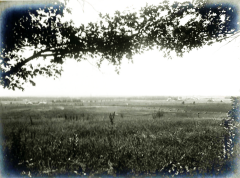
This plot belonged to Minnesota’s fifth governor and Civil War General William R. Marshall. Roselawn acquired the land with the stipulation that Marshall’s war horse Don, who was buried on the property, remain undisturbed. Marshall’s house, located on cemetery ground, was moved across the street (#29 on the Roseville Heritage Trail map). Renowned architects Cass Gilbert (who also designed the Minnesota State Capitol Building) and Thomas Holyoke were commissioned in 1902 to lay out the cemetery and design its buildings.
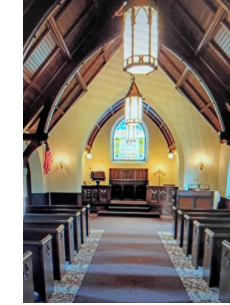
Roselawn’s site plan and buildings (chapel, office, carriage house and entrance gates) were planned as one project. Their architectural design was inspired by Medieval English country church architecture. This style was chosen to evoke an atmosphere of peace and comfort for grieving families. Building elements included Oneota limestone (also called Kasota or Mankato limestone), Indiana limestone trim, hammer beams with carved faces, carved bargeboards and flat red clay roof tiles. The chapel interior featured intricate ironwork, vibrant stained glass, Guastavino tile vaults and a collection of Stickley furniture selected in 1902.
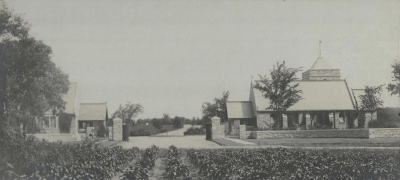
Over time, art installations, architectural expansions and facility restorations enhanced and updated Roselawn. These include:
Cube Column Resurrection (1980)
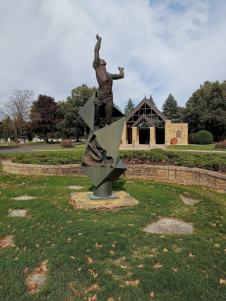
This contemporary bronze sculpture by renowned Minnesota artist Paul Grandlund is located near the Community Mausoleum.
Granlund’s abstract monument explores the human lifecycle. The cube represents earthly existence. The vertical movement represents spiritual flow, salvation, and the final transition from earthly limitations. The artist described his piece as “Death shadowing Life and Life transcending Death.”
Garden of Remembrance and Ossuary (2007)
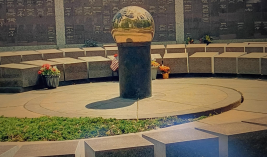
The concept of an ossuary, a communal chamber for cremated remains, as a final resting place began in the 1980s. Roselawn’s own sculptural ossuary was created in 2007 by artist Nicholas Legaros. This “work of art and place of rest” lies in front of the Garden of Remembrance Niche Wall.
Reaching the ossuary requires walking a stone-lined spiral pathway, a physical metaphor for the journey of grief, remembrance and processing loss. The path ultimately leads to “The Orpheus Experience,” a large bronze sphere with an opening for co-mingled cremated remains. This two foot bronze orb is embedded with a variety of human handprints. Legaros hoped that resting one’s hand in one of these prints would give survivors comfort and connection to their loved ones.
The Community Mausoleum (2008)
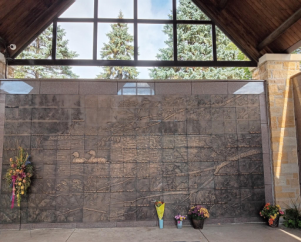
The Mausoleum is built from Mankato limestone with a slate roof design to match the Chapel and Administrative Building. The north wall features a striking “scored” bronze scene of the North Woods, and contains 180 urn niche spaces. The east and west walls serve as crypt spaces for above ground casketed burial.
Split Rock Garden (completed 2012)
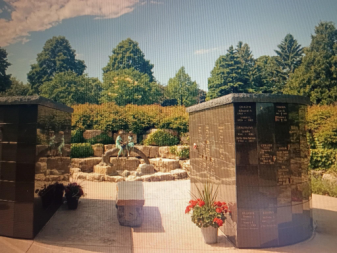
Split Rock Garden, located just north of the Chapel, is a serene memorial area designed for quiet reflection. Its core features two half-circle granite columbaria, or structures of vaults lined with niches housing cremation ashes, mirroring each other. In the center is a circulating pond perched with two children holding a water-spouting turtle. The whole area offers visitors a peaceful place to sit and remember their loved ones.
Veterans Memorial (2014)
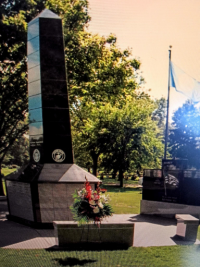
The Veterans Memorial was created as a dedicated central space to honor those who have served our country. The central obelisk’s pentagon-shaped base can hold hundreds of ossuarium placements. The 17-foot black granite obelisk itself is engraved with all five emblems of the U.S. Military. The Veteran Memorial Wall was later integrated as a place to memorialize local veterans.
Every year a formal Memorial Day remembrance ceremony is held at the obelisk to honor fallen service members.
Chapel renovations (2023-2026)
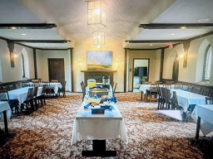
The unheated North Wing was originally used as crypt and burial vault “cold storage” during the winter months. In the Spring, the ground thawed and burials could proceed. Over time, ground heaters enabled year-round burials and the “catacombs” sat vacant for decades.
In the 1990s, part of the North Wing was converted to a fireside gathering and reception space. The remaining area houses private meeting space and a prep kitchen.
The Chapel has undergone pew and interior floor restorations, also with exterior stone tuckpointing and roof replacement.
Despite these additions and alterations, the serene, beautiful setting of Roselawn Cemetery remains largely unaltered from Gilbert and Holyoke’s design. Only 110 of the original 160 acres are now in use. Fifty acres will be used in the future, and ten will remain in a natural undeveloped state.
In 2020, the Roselawn Chapel and Administrative Building were officially listed on the National Register of Historic Places. Out of Roseville’s many cherished landmarks, Roselawn Cemetery stands majestically as one of our city’s crown jewels.
“We proudly embrace a non-denominational and non-sectarian approach, welcoming individuals and families from all backgrounds and beliefs. At Roselawn, we celebrate the diversity of the communities we serve, fostering an inclusive environment where everyone can find peace and solace. Our mission is to provide a space that respects and honors the unique stories of each individual, making it a meaningful place for all.”