
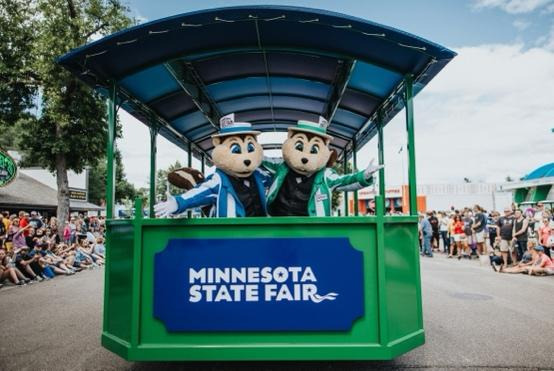
Lead image courtesy of The Minnesota State Fair
Once an internship-seeking college student, Renee Alexander never dreamed she would someday head up the Great Minnesota Get-Together.
By June Damrow – Volunteer Contributor
Learning what it takes to host 1.9 million people over 12 days was on the agenda when the University of Minnesota Women’s Club hosted a luncheon on Feb. 10 with Renee Alexander, 23rd CEO of the Minnesota State Fair and the first woman to hold the position.
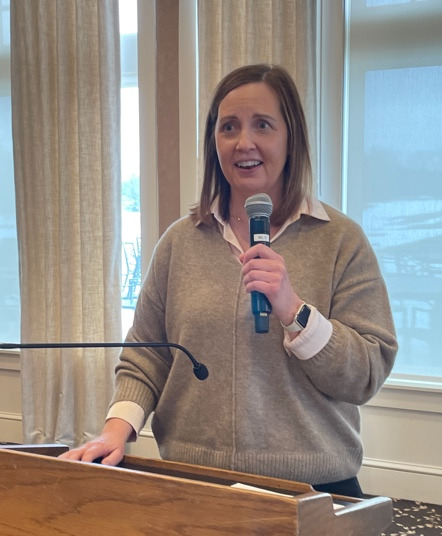
For most of us, the Fair is a carefree experience. For Alexander and her 90 full-time employees, it’s an intensive, year-round endeavor.
The employee count swells to approximately 3,000 during the fair and to 7,000 when vendors and their employees are included in the total.
With an annual economic impact for the Twin Cities area of around $300 million, their work is serious business. Not only is it the largest 12-day fair in the country, it’s the best in the nation, according to the 2025 USA Today Readers’ Choice Awards.
Alexander, a Minnesota native, started working for the fair in 1989 as an intern. This led to an offer of full-time employment booking acts to appear on the free stages. The position was not without its diverse experiences— she remembers interviewing a high wire walker, an elephant trainer and a carnival owner.
She left the fair after five years to pursue other endeavors but came back 20 years ago as Entertainment Director. When longtime CEO Jerry Hammer retired in 2023, the Fair’s board decided that Alexander, whose passions are agriculture, education and community celebration, was the right choice.
A brief history
The first fairs in Minnesota history took place before it was even a state. Minneapolis in 1855 and 1857 in St. Paul both hosted territorial fairs, and Minnesota did not gain statehood until 1858.
The first official Minnesota State Fair was held in Minneapolis in 1859. For the next two-and-a-half decades, it bounced around to various locations, including Fort Snelling, Red Wing, Rochester, Winona and Owatonna. It found its permanent location in 1885, when the 210-acre Ramsey County Poor Farm was donated to the Minnesota Agricultural Society. That Society is still the governing body of the fair, which now encompasses 322 acres.
There were several years the fair was not held: 1861 (Civil War), 1862 (Civil War and U.S.-Dakota War), 1893 (World’s Columbian Exposition in Chicago), 1945 (World War II), 1946 (polio epidemic), and 2020 (COVID).
People, place, community
Alexander said she keeps three pillars top of mind: People, Place and Community.
As CEO she is responsible for all aspects of the fair, including programming, infrastructure and initiatives. The fair is self-supported and does not receive government funding. This is a particular challenge, as the cost of doing business has inevitably risen over the years. In 2002, the Minnesota State Fair Foundation was established to support programming and infrastructure.
Her team constantly checks other events in the market to make sure the fair is offering what people want to do, see and eat and give them the greatest value for their money. The good news this year is that ticket prices are remaining the same as 2025.
The fair is certainly one of Minnesota’s most cherished traditions, and as such, many aspects remain the same each year. Still, Alexander is aware that tradition needs an infusion of momentum to keep it fresh and relevant.
And who doesn’t look forward to the annual new food offerings? At this luncheon at the Midland Hills Country Club in Roseville, guests were treated to a taste of late summer: baked pickles, chicken-on-a-stick, tater tots, corn-on-the-cob and a super-sized ice cream sandwich.
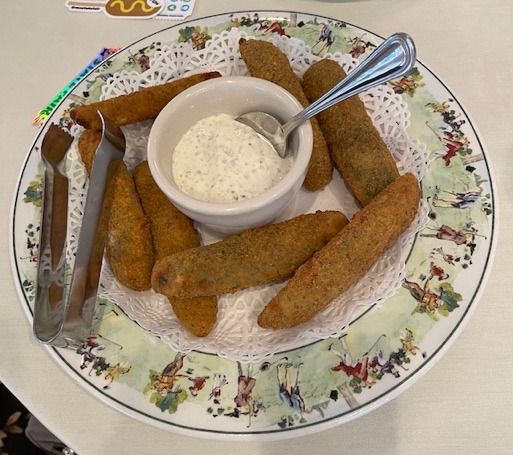
Vendor spots are coveted. All 300 vendors have annual licenses that must be renewed each year. They hire their own employees. When a vendor vacates, it’s not simply a matter of calling the next person on the waiting list. In order to ensure a good mix of offerings, vendors are curated for unique and quality products and, most importantly, their ability to serve a lot of people in a short amount of time. The New Foods Committee does extensive taste testing before a vendor is chosen, a job that most of us envy.
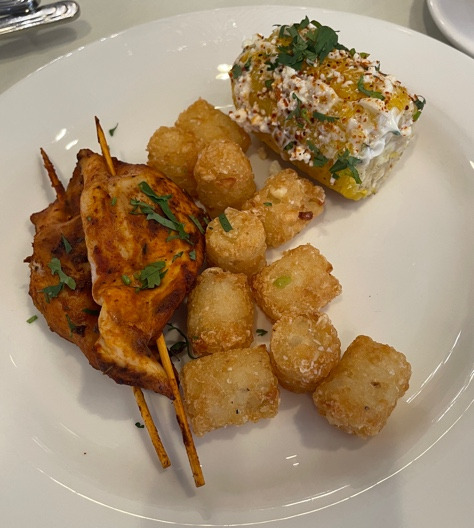
The majority of vendors are local. These “50-milers” —those who live within 50 miles of the fair— also work at county fairs and other area events. There are some vendors, however, that tour the country. For example, the Great Big Wheel was at the Florida State Fair at the time of this presentation.
A nationally-known affair
The CEO also books grandstand entertainment. Alexander would seem to be uniquely qualified for this duty, having previously been entertainment director. The process for booking entertainment has changed over the years, and is now a year-round process.
There is more competition for venues now, too. While the grandstand holds 14,000 people, Shakopee has a new 19,000-seat amphitheater. St. Paul also hosts a two-day Minnesota Country Club Fest in July. In addition, entertainers’ touring schedules may not allow them to be in the Twin Cities at fair time.
This year’s great grandstand line-up includes Bonnie Raitt, Weird “Al” Yankovic, Sierra Farrell, Rod Stewart and Richard Marx, Alexander said.
The Princess Kay of the Milky Way contest is a highly-anticipated annual event. Sponsored by Midwest Dairy, the princess is a goodwill ambassador for the dairy industry. The iconic process of sculpting a likeness of her head in butter always draws a crowd of onlookers. That 60-pound sculpture goes home with her at the end of the fair.
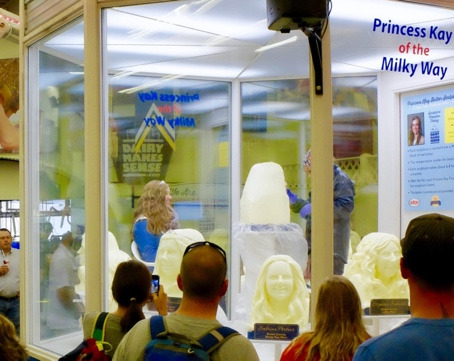
The Minnesota State Fair is currently represented at the Renwick Gallery of the Smithsonian American Art Museum in Washington, D.C. The exhibit, entitled “State Fairs: Growing American Craft,” features several crop art portraits. In addition, the crop art promotional image for the exhibit was made by Minnesotan Liz Schreiber.
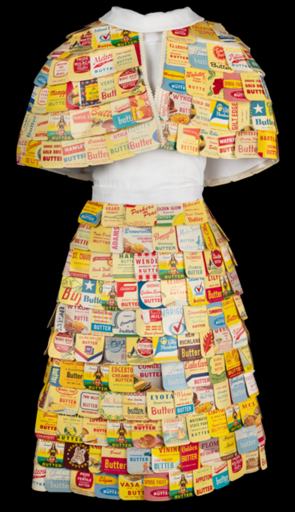
The aforementioned butter is not forgotten. The 1965 butter carton dress, worn by that year’s Princess Kay, is on display, on loan from the Minnesota Historical Society.
Tradition with forward momentum
4-H participation is not only alive and well, it is growing. One of Alexander’s favorite Fair moments is shaking the hands of the young adults at the 4-H Purple Ribbon Livestock Auction the first Saturday night of the fair. This auction, which includes cattle, poultry, goats, sheep and swine, gives 4-Hers the opportunity to show off their expertise in raising prize-winning livestock while supporting scholarships for 4-H members.
The Amateur Talent Contest, with auditions held in late July and the finals taking place on the grandstand stage, has no shortage of entrants. State Fair staff auditions about 400 acts, another enviable job to most of us.
For most of the past year, the Coliseum, one of the fair’s many historic buildings and landmarks, has been undergoing a major renovation. Expected to total around $23 million, it will reinforce the safety of the structure and update the electrical and mechanical networks. It’s expected to reopen this April in time for the Minnesota Horse Expo.
A recent addition, Kickoff to Summer at the Fair, started post-COVID and quickly became a staple of Memorial Day weekend. As a mini-State Fair, it’s a wonderful way to enjoy the fair’s atmosphere and offerings in a smaller, easier-to-navigate environment. This year’s dates are May 21-24.
A melting pot
Alexander is proud of the diversity of people the fair draws and strives to continue living up to the slogan given it by Minneapolis St. Paul Magazine: the “Melting Pot of the State.” Increasing numbers of guests come from out of state, giving credence to the fact that the Minnesota State Fair is a destination.
The fair’s web site, mnstatefair.org, is a wealth of information. Check it out for fair history, photos and the schedule of year-round activities at the fairgrounds.
If you’d like to know more about the University of Minnesota Women’s Club, an organization offering scholarship support for University of Minnesota students as well as a variety of interest sections for its members, see umwc.umn.org.
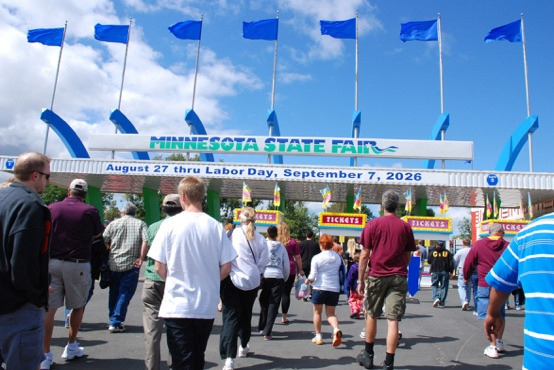
And be sure to look for Renee Alexander at 7 a.m. on Thursday, Aug. 27. She’ll be the one ringing the cowbell at the front gates to open the 2026 Great Minnesota Get-Together.