

In Roseville, Indigenous Americans are community leaders, academics, educators and business owners, highlighting the prevalence of suburban Native communities and their unique experiences
by Sommer Wagen
Before there were suburbs, there were people.
The land upon which the Twin Cities metropolitan area now exists is the ancestral and contemporary homeland of the Dakota people. Their traditional point of origin at the confluence of the Mississippi and Minnesota Rivers, known as Bdóte in the Dakota language, is just a 22 minute drive from Roseville. The Ojibwe people and numerous other tribes also existed in the region, with trade items from here and elsewhere being found along the entire Mississippi, according to the Minnesota Historical Society.
Those people are still here, still serving their communities. They are community leaders and educators, academics and business owners, writers and creatives. According to the 2020 United States Census, 210 people in Roseville identified as American Indian/Alaska Native. The 2023 American Community Survey estimates that 173 residents identify as such. Roseville’s total population as of 2024 is 35,637. Despite those numbers, Roseville’s Indigenous community and history continues to make an indelible impact on the city. It can be seen in the names of places like Aŋpétu Téča and Keya Park, but also in the very people who call Roseville home.
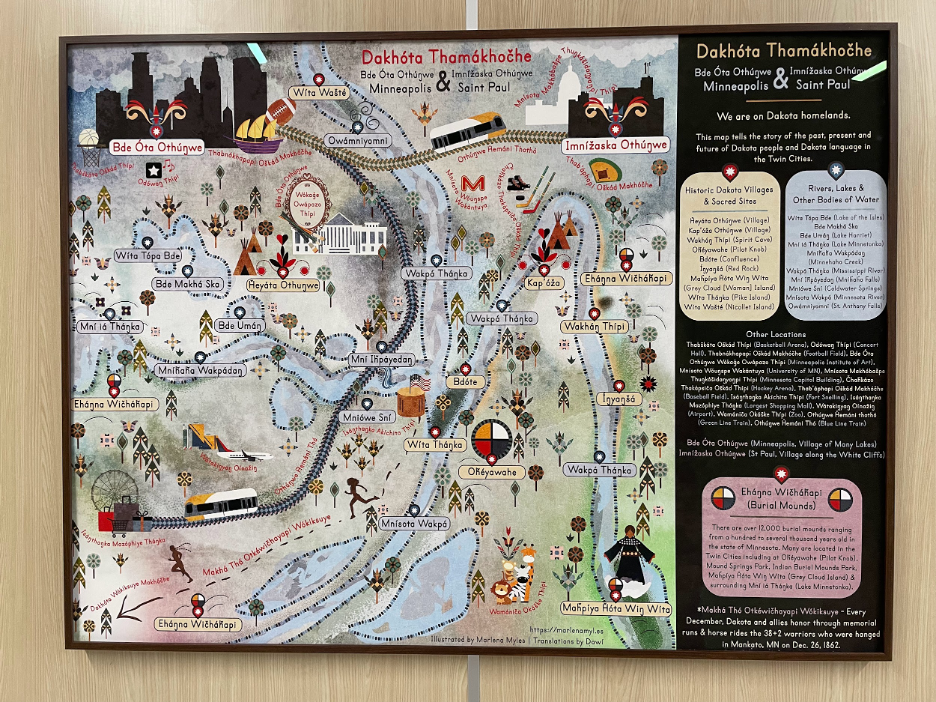
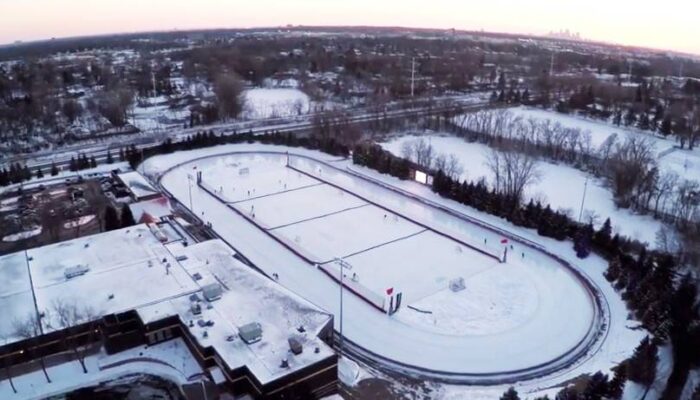
Photo by Sommer Wagen.
A story of suburban Indigeneity
According to the Roseville Historical Society, an important trail that led to ricing and fishing areas in present-day Hugo and Forest Lake for nearby Dakota communities ran through what became Rose Township and later Roseville. This, in turn, increased their contact with settlers.
Ultimately, the Dakota people were banished from their Minnesota homeland following the 1862 uprising caused by treaty-promised payments being abandoned by the United States government.
The relocation program of the mid-twentieth century later shifted Indigenous populations towards urban and suburban areas in an attempt to eliminate reservations, tribal designations and, ultimately, Indigenous people via assimilation.
The Twin Cities themselves have been an epicenter of Native American activism, culture and community— the American Indian Movement (AIM) was founded in Minneapolis in 1968, for example— but while urban Indigenous stories have proliferated, suburban Indigenous histories and experiences often go overlooked. In fact, the above information from RHS is all that is currently available about Roseville’s Indigenous history.
“Suburban Indians occupy a somewhat liminal space geographically, temporally, and culturally,” wrote Dr. Kasey Keeler, Tuolumne Me-Wuk & Citizen Potawatomi, in “Beyond the White Picket Fence: American Indians, Suburbanization, and Homeownership.”
Suburban Native Americans, Dr. Keeler explained, often live away from their tribal communities, but with varying ties to their tribal identities. What’s more, suburbs themselves are a relatively new invention, but the lands they occupy were long stewarded by Indigenous people. Many Indigenous suburbanites have also faced racism and pressures to assimilate in predominantly white communities, as well as a sense of isolation from their Indigeneity.
In order to further explore suburban Indigeneity, Dr. Keeler helped found the Bassett Creek Oral History Project, the first gathering of suburban Indigenous stories in the U.S.
Centered around the Bassett Creek (Ȟaȟa Wakpadaŋ in the Dakota language) Watershed in the western Twin Cities suburbs, 14 locals with 9+ tribal backgrounds share their stories of the place they now call home.
Dr. Keeler herself grew up in Coon Rapids, Minn. and later moved to Crystal, Minn. to buy her first home.
“I think this project really opens the door to giving a spotlight to the significant American Indian population,” she said in the project’s first episode. “We know that about 70% of American Indian people actually live away from reservations and increasingly in metropolitan areas. This is a growing population, and I think it better reflects American Indian people.”
Dr. Keeler also described how the project helps to reconnect suburban communities to their Indigeneity beyond a surface level.
“When we have places like Minnetonka and Wayzata and Shakopee and Anoka, I think it’s a little bit easier to say ‘Oh yes, look at the name of our suburb. That is an Indigenous name.’ But then we lose sight of the actual Native people who live there contemporarily and the Native people who have always lived there,” she said. “What does it mean for this suburb to be a Dakota place? What does it mean to live in a Dakota place?”
“This is home now”
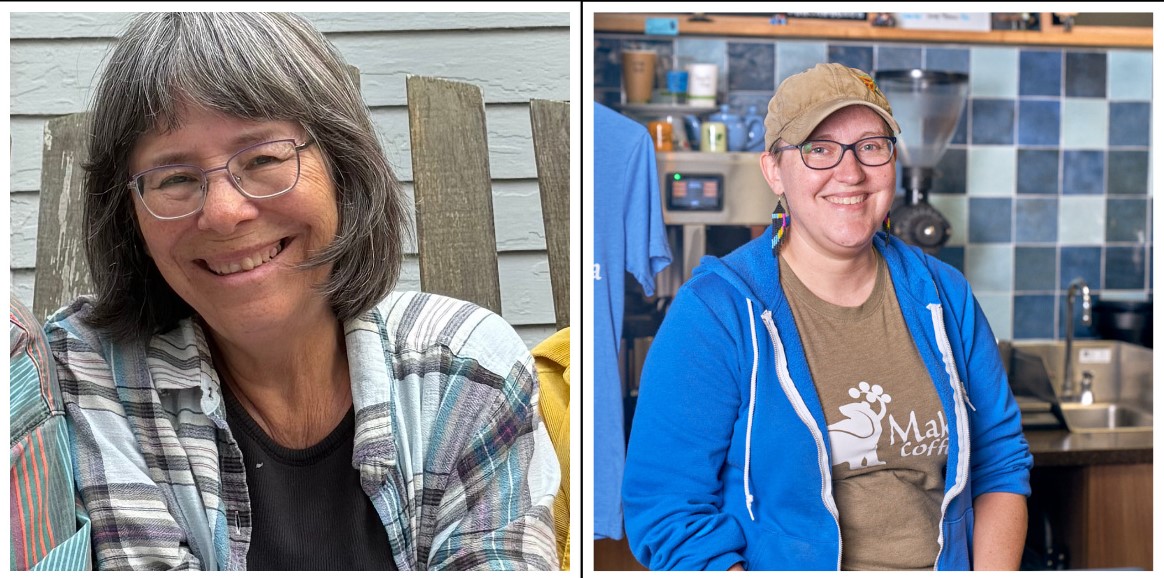
Roseville resident, professor and author Dr. Pauline Danforth, White Earth Ojibwe, grew up between Minneapolis and the White Earth Reservation in northwest Minnesota. She and her family moved back to Minneapolis while she pursued her Doctorate in American Studies at the University of Minnesota. However, a homicide on their block in the Standish neighborhood eventually pushed them out into the suburbs.
Having now lived in Roseville for 21 years, Dr. Danforth said it provides, “the comfort of the suburbs with city Indian activities,” such as powwows.
She added that her cousin also lives in Roseville, and that a lot of her Native friends live in the suburbs, as well.
“This is home now,” she said with a smile.
Dr. Danforth, a community faculty member and retired advisor at Metropolitan State University in St. Paul, mentioned Roseville’s Wild Rice Festival as a way the city works to connect with and uplift its Indigenous community.
“I try to go every year,” she said. “[The city of Roseville] makes it legitimate for Indigenous people to participate.”
Dr. Danforth identifies as a writer and storyteller. At Metro State, she exposes her students to Native literature and oral traditions in order to “open their eyes to Native perspectives.” Her prose and poetry has been published extensively, including a piece titled about a maple tree in her Roseville yard for Orion Magazine.
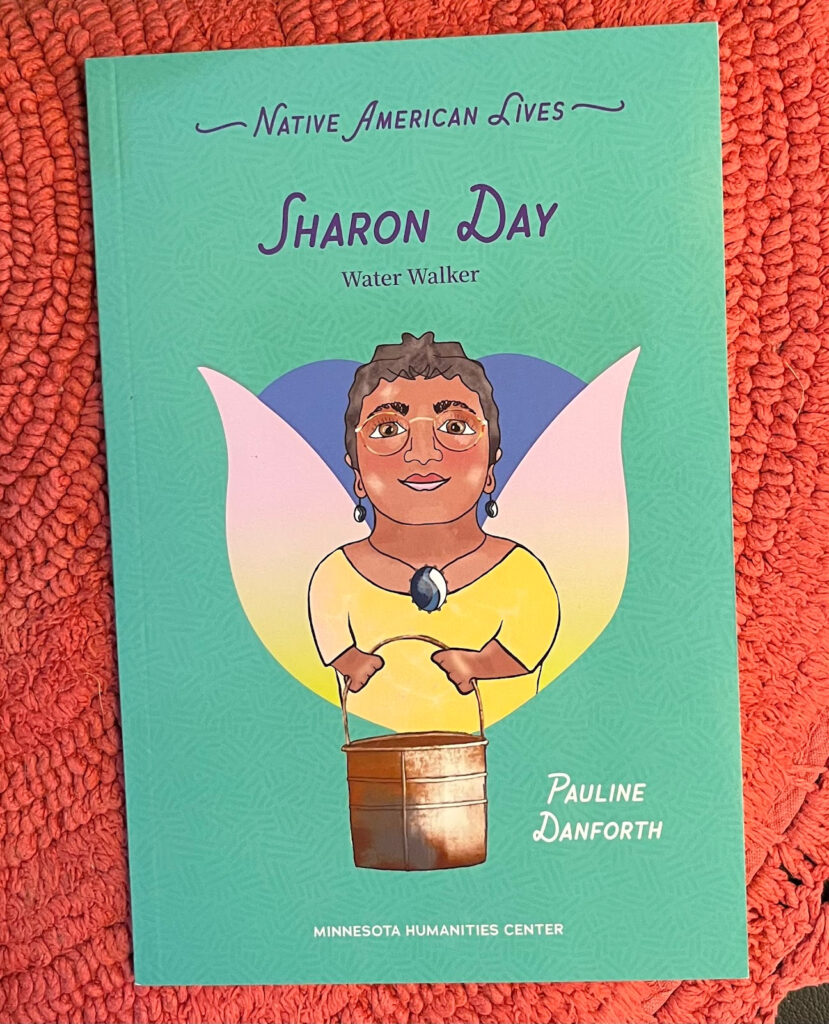
Her most recent project is a middle grade biography of Sharon Day, Bois Forte Ojibwe, another prolific Twin Cities Native activist known for her Water Walks. The book is set to release next year.
One of Dr. Danforth’s poems appears at the beginning of the novel “Silent Words” by Joan Drury. In it, she states clearly her purpose as a writer of transmitting the stories of her ancestors:
“I write for those who cannot speak / Voices unrehearsed / Grandmothers who came before me / Whisper silent words.”
“At the base of everything”
Dr. Danforth said her Native identity is inseparable from who she is as a person. Similarly, Jamie Becker-Finn, Leech Lake Ojibwe Roseville resident and owner of Makwa Coffee, said being an Indigenous person means “everything” to her.
“At the base of everything, the core under everything and the way I see the world and the way that I’m raising my kids is grounded in my identity as an Ojibwe person,” Becker-Finn said.
Also like Dr. Danforth, Becker-Finn grew up on her tribe’s reservation and later moved to the Twin Cities area for school. She noted that Roseville was more familiar to her than other places in the metro, and being on the north side of town makes drives up to Leech Lake easier.
Becker-Finn served in the Minnesota House of Representatives from 2017 to 2025, during which she helped found both the People of Color Indigenous (POCI) and Queer Caucuses of the DFL.
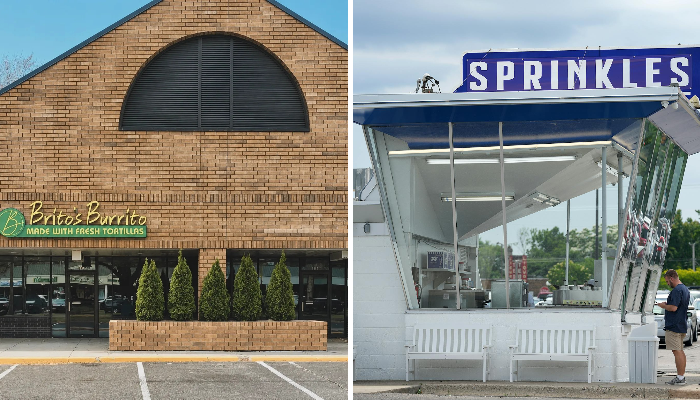
Makwa opened in 2023, and has since become a central gathering place in Roseville. In a way, Becker-Finn is carrying on a family tradition, since her father and uncle owned the two convenience stores in her hometown that served as a meeting place in their rural community. In Makwa’s case, Becker-Finn said it beats back against the sense of isolation that suburbs create.
“I think we actually all want human connection,” she said. “I feel like if all the phones went dead, people would just sort of migrate [to Makwa] to find each other.”
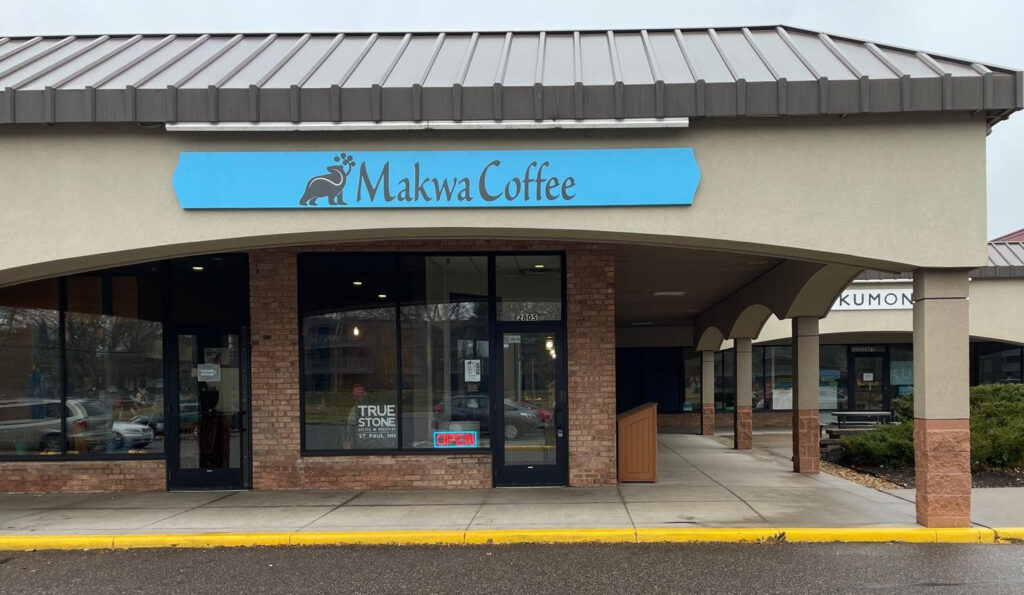
She added that she didn’t realize how many other Indigenous people live in Roseville until they started coming to Makwa.
Becker-Finn said she runs Makwa by her own values of community, safety and support, which she said goes against extractive business models encouraged by capitalism.
“My employees are a very important part [of Makwa]. None of us do everything on our own,” she said. “It isn’t just about a transaction. My goal isn’t to extract as much as possible. I couldn’t maintain Makwa or build it to what it is without the staff and our regulars and the neighborhood.”
Connecting with future generations
Becker-Finn also lauded Roseville Schools’ American Indian Education Program as “the heart” of Roseville’s Indigenous community. With two children in Roseville Area Schools, she serves on the program’s Parent Advisory Committee, which meets monthly to determine how funding is used.
Education has historically been weaponized against Indigenous people in the form of boarding schools. Minnesota developed and piloted the country’s first AIEP, which was designed to bolster Indigenous education and high school graduation rates and thus heal that trauma.
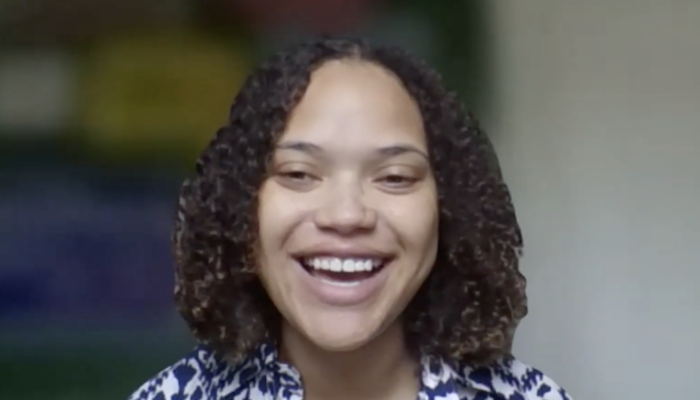
“Our programming adds something essential to the school experience: Indigenous identity and worldview,” Gabriella Carroll, the program’s coordinator, wrote in an email. “Students often say they feel more connected, confident, and understood in these spaces, and many tell us that group time is a highlight of their week. Parents appreciate having a program that listens to them, partners with them, and values their voices.”
The programming includes affinity groups, beading and hands-on cultural arts, field trips, family events such as round dances and shared meals and learning that builds Indigenous awareness, identity, and belonging. Carroll, who is a Grand Portage Ojibwe and Lower Indian Sioux Community descendant, said that about 240 PK-12 students at Roseville Schools are eligible for the program.
Carroll highlighted the importance of the AIEP in Roseville’s suburban community as a way to combat the feeling of isolation felt by Indigenous suburbanites.
“Suburban Native families can sometimes feel isolated, so our program focuses on creating community connections,” she wrote. “Our program is built on the belief that Indigenous students deserve to feel proud of who they are every single day.”