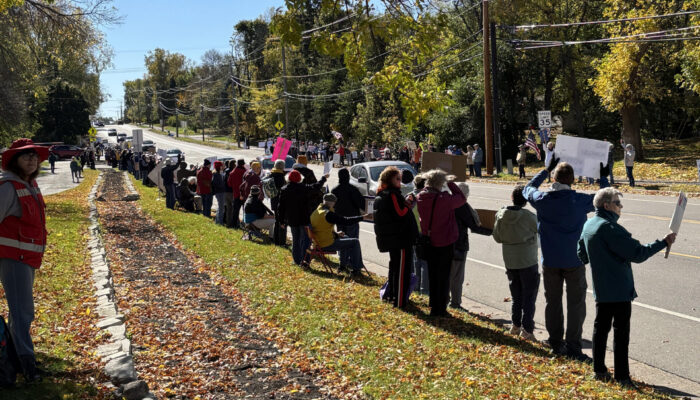
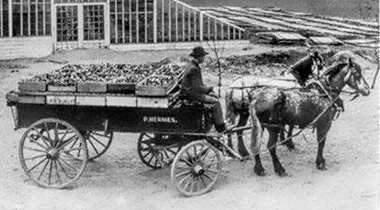
A wagonload of pansies at Hermes. Credit: City of Falcon Heights
Although things have changed over the past century, former Larpenteur Avenue greenhouse sites sites are continuing to serve the community in new and exciting ways
If you are a long-time Roseville resident, you may remember the truck farms and greenhouses on Larpenteur Avenue: Lebens, Hermes and Linder’s.
These were all small, family-owned businesses. Sadly, like so many of our small businesses, they have vanished. However, unlike many sites that have been transformed into large-scale commercial developments, these three have retained their community roots and continue to serve in different— and exciting— ways.
Lebens: From growing flowers to growing community
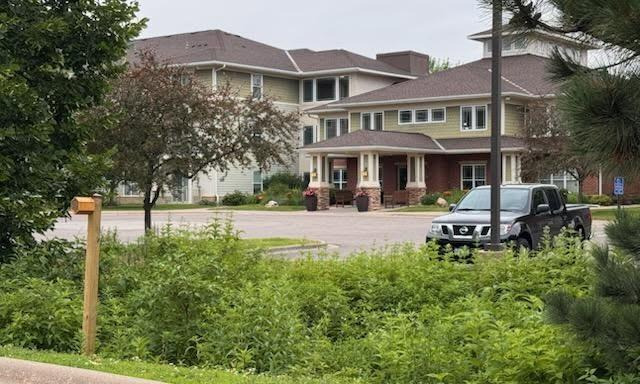
The first to be redeveloped was Lebens Flowers. Nicholas Lebens first homesteaded land at 1021 W Larpenteur Ave. in 1882, then opened his flower business there in 1923.
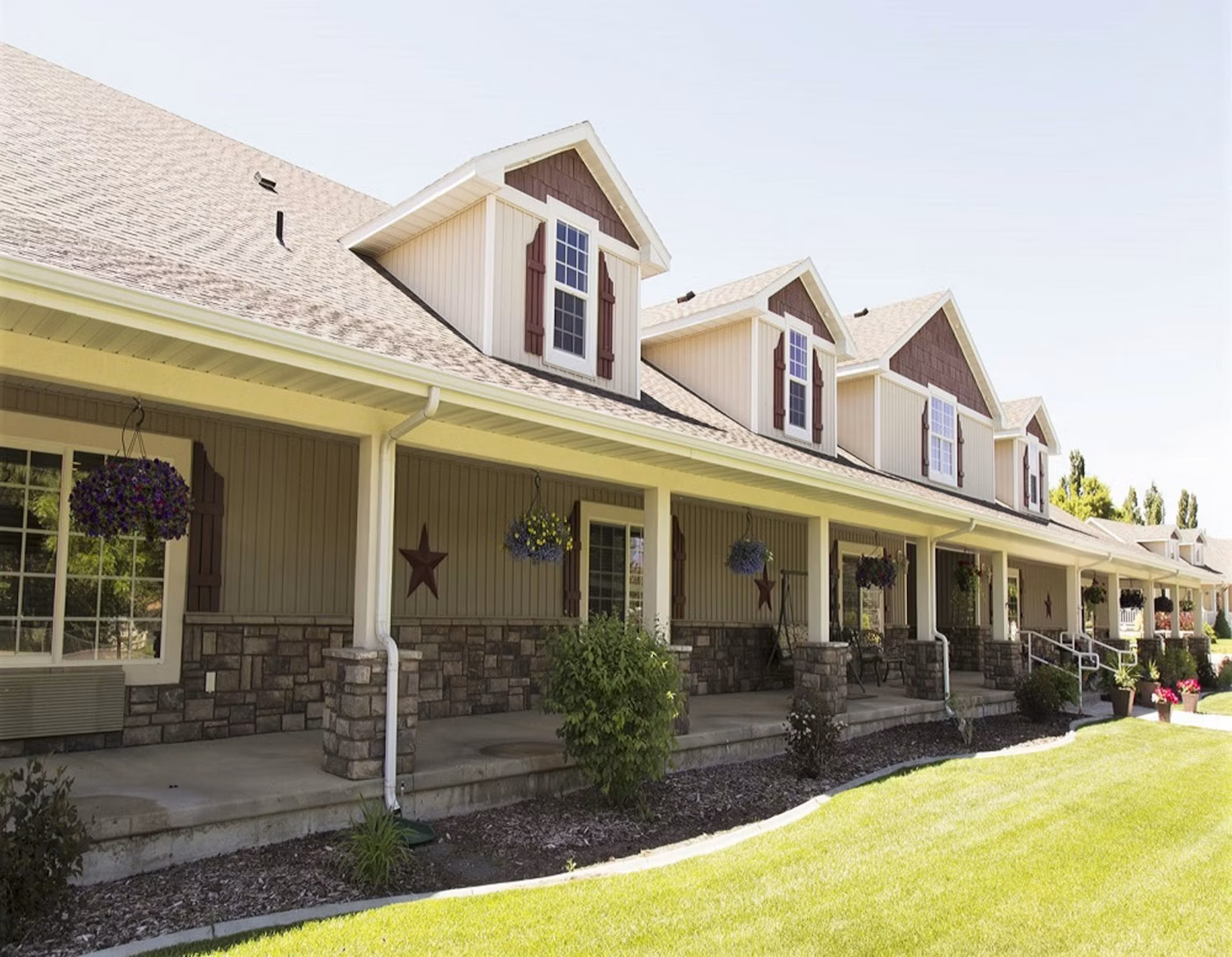
After the company was sold and its buildings demolished, Greenhouse Village Cooperative for those 55 and older opened on the site in 2006. The site was developed to honor its horticultural origins with “beautifully landscaped grounds and areas for residents to garden,” per the Greenhouse Village website. Patricia Lebens, the widow of Nicholas Lebens, Jr., even lived at Greenhouse.
As a cooperative, the site is managed by residents. Everyone who wishes to contribute their ideas and expertise has a place. It has many common areas where the community can meet and entertain visitors.
Hermes Floral Company
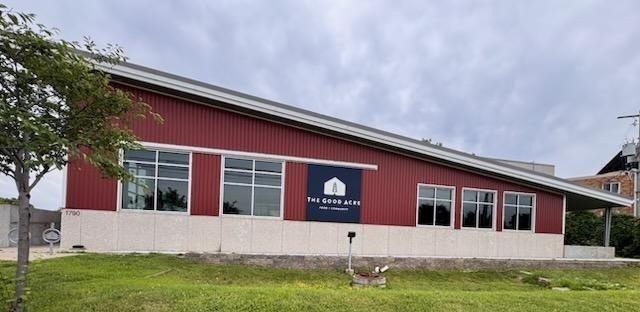
Hermes Floral Company was founded by Peter Hermes in 1906 when he converted his vegetable farm into a flower farm.
Grandsons Jim and Don Hermes carried on the business into the 21st century, having 120,000 square feet of greenhouse space in Hudson, Wisc. and shipping 300,000 tulips and 10,000 potted Easter Lilies in the spring of 2006.
Unfortunately, times changed and so did global markets, and Hermes Floral Company sold its land to the Pohlad Family in 2013.
The site, however, has continued in the farming tradition. The Good Acre was established in 2016 with a goal of helping farmers and food entrepreneurs by providing personalized support and market development.
During its first decade, The Good Acre has grown to be the largest nonprofit food hub in Minnesota. It serves as a food aggregator for over 150 local farmers and food producers providing food boxes for Community Supported Agriculture (CSA) clients.
Food aggregation is bringing multiple food vendors and services into one ecosystem, according to thesmartq.com. The most familiar example is food delivery apps like DoorDash or UberEats. The Good Acre and other organizations, however, do this in a business-to-business model, helping local farmers supply their products to grocery stores, schools and beyond.
The Good Acre site is complete with large refrigerator and freezer units. Seasonal staff and volunteers assemble boxes for FoodRx, a nutrition education program by Second Harvest Heartland, as well as regular CSA clients.
Linder’s
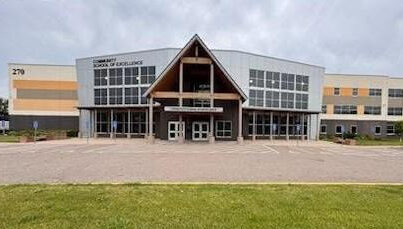
Linder’s Greenhouses at 270 W Larpenteur Ave., a few blocks east of Rice Street, was the last local greenhouse location to close.
It began life as a modest celery farm founded by Albert Linder in 1910. Linder delivered his produce by horse cart to local Chinese restaurants. By 1940, when refrigerated transport allowed celery to be trucked in from California, he pivoted to selling flowers and bedding plants.
When Albert passed, his sons Peter and Walter expanded the greenhouses. By 1984, a third generation was operating a massive retail hub. In 2010, like Hermes, Linders had a 52-acre site in Lake Elmo, Minn. and many pop-up flower marts across the cities. With the bad spring of 2013 and mounting price competition from big box retailers, the family sold in the fall of 2013.
The Community School of Excellence began as a charter school in 2007, opening at its current location at the former Linder’s site in fall 2016. Its stated vision is of a school where “school parents, staff, students and community are committed, as a team, to provide a quality education for all students to achieve high academic expectations and connect globally to Hmong students around the world.”
Students at the school read, write and speak in English, Hmong and Mandarin Chinese. Today, the school has the maximum number of students in most grades and a proven record of student success.
So, from the early days of growing celery for Chinese restaurants to serving culturally appropriate school meals today, the site continues to nourish the community.