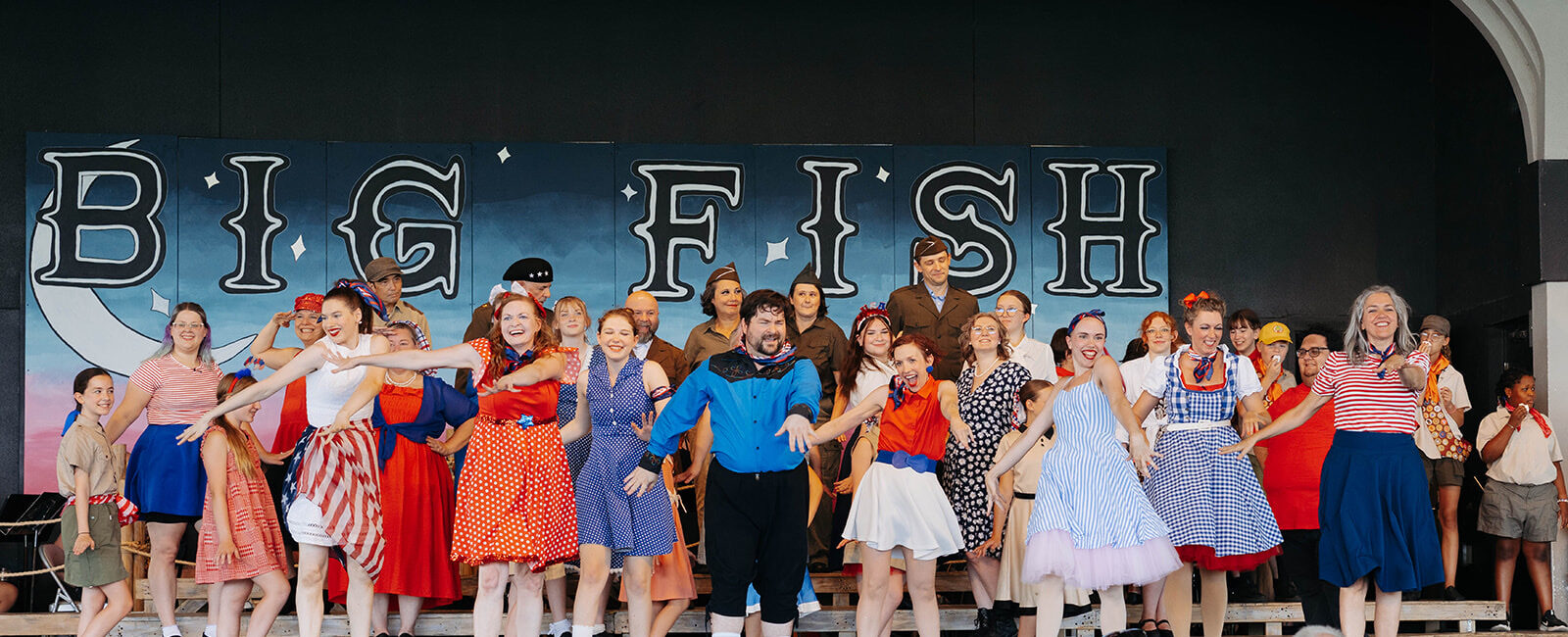
Rosetown Playhouse players perform “Big Fish” at the Como Lake Pavillion in July, 2026. Credit: Phyllis Welsh/Mei Mei Photography
For over 25 years, the Roseville community theater has been giving everyone a chance to perform
In 1999, Minnesota theater lovers banded together to bring a new group to the Roseville community: Rosetown Playhouse.
For over 25 years, they have worked to bring a “twist” to the typical theater scene, catering to those of all ages and abilities, whether you’re “8 or 80 years old!”
“When you walk down a street, you see babies. When you see a Rosetown show, it’s going to accurately reflect what you see in real life, so that’s babies all the way up to the elderly,” said Rosetown Vice President Casey Scott. “It all just boils back down to that opportunity and that inclusivity, and just fun.”
The theater’s summer production is when their age-inclusive mission especially shows.
“I think our summer show really epitomizes the idea that we are a village,” Rosetown secretary Valerie Neri said. “Like we are together… there aren’t that many opportunities for people to be in multigenerational situations, for adults to be learning from kids and kids to be learning from adults that aren’t family, that aren’t school.”
This July’s show was “Big Fish,” a musical that follows estranged journalist Will Bloom trying to separate fact from fiction regarding his dying father, Edward.
“I wasn’t in ‘Big Fish’ this year, but as someone involved with it from the outside, I really loved it… That was a really good one,” Scott said. “It was so unlike what we typically do. I think a lot of times we go for these big‑name shows, and this time we went for more of a heartfelt story, and it was beautiful. I loved it.”
Neri, who played a Swamp Creature and Medical Staff in “Big Fish,” added that her fellow actor’s performances emphasized the musical’s meaningful message.
“It’s happy, but it’s poignant, it’s funny,” she said. “Boy, the characters who portrayed those lead roles, like they were embodying those relationships. I cried on stage every single time.”
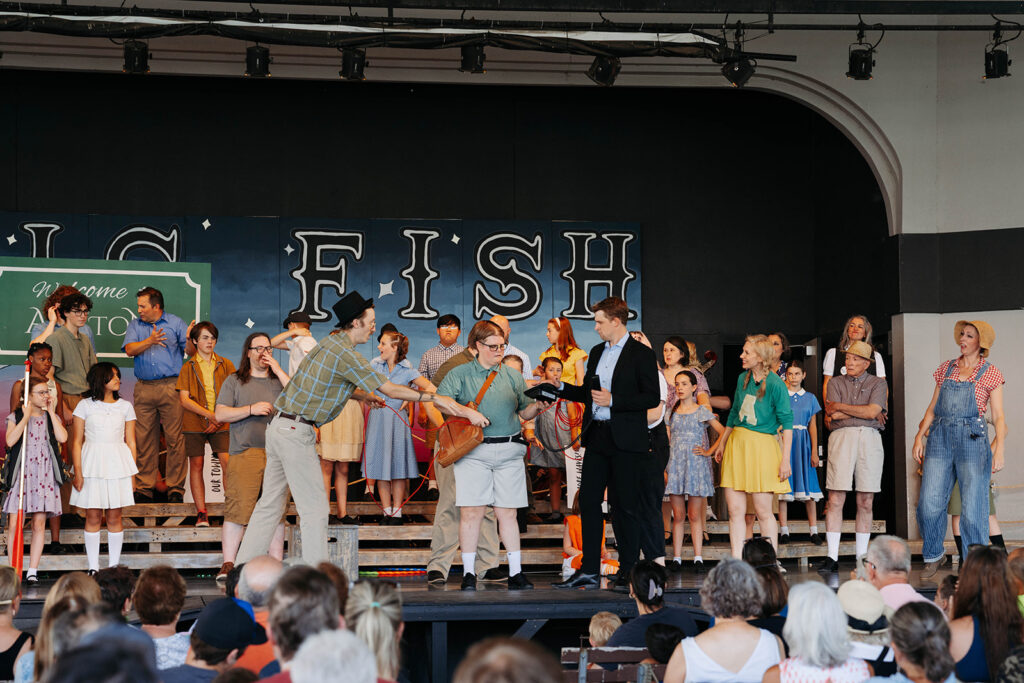
“Big Fish” was a big hit in Roseville based on attendance. Rosetown leaders say the show reflects a deeper commitment to building community both onstage and off.
“I’ve known so many people that say, ‘Well, I’m going to try a different theater community,’ and then talking to them later, they say, ‘You know, nobody knows my name… people come and they’re so serious… I don’t get to know them and I don’t feel known,’” Neri said. “People don’t say that with Rosetown. With Rosetown, it’s ‘Will you sign my program?’, checking in on each other, noticing when somebody’s not there, grieving the loss of a community member together. I think that really sets us apart.”
Scott joined Rosetown after graduating high school in 2013, looking for another tight-knit theater community.
“I was a big theater kid, and I was looking for ways to continue doing that outside of school. I knew Margot Olson, who was a longtime director and founder of Rosetown, and I’m like, ‘Okay, I’ll give this a shot.’” she said. “And then, you know, you find your spot, you find a community, and you just kind of… you stick around for that. You come for the theater and stay for the community.”
While Scott and Neri have both found community at Rosetown being a part of its board, there are also many opportunities to find friends and support behind the scenes.
“We have people selling tickets, ushering, managing the cast, helping paint, helping build and helping at rehearsals,” Scott said. “Sometimes we have special projects like reorganizing our storage, helping out the costumer with sewing projects and our committees are open to non-board members.”
It’s easy to get involved, and better yet, any form of involvement is free.
“We don’t charge fees for anyone to participate ever,” Scott said. “We’re a nonprofit, so that’s how we run, with donations.”
Donations allow Rosetown to make participation accessible and performances affordable to everyone.
“Every donation is well used,” Neri said. “It always goes back into our productions, whether it’s donations of time or talent.”
While Rosetown is still waiting to hear about the official attendance numbers from “Big Fish,” they say its most important measure is whether people feel like they belong.
Or as Neri put it, “This—that is the core of Rosetown—is that community and finding a place for everybody.”
Cecilia Wallace can be reached at celiadw016@gmail.com.