

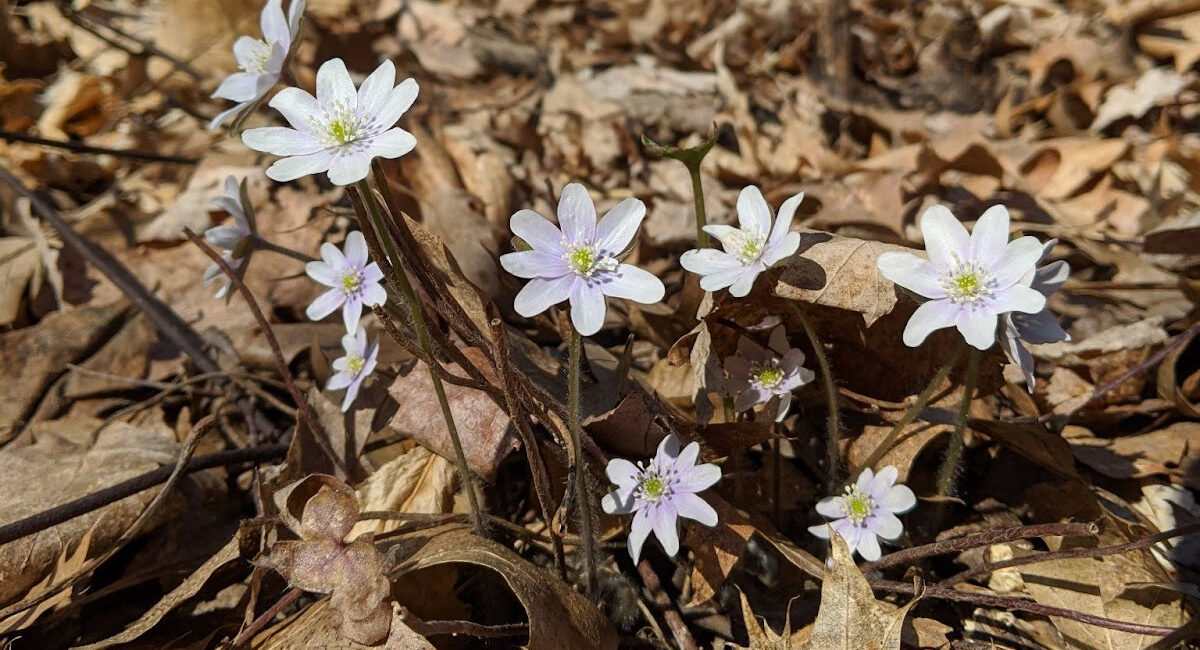
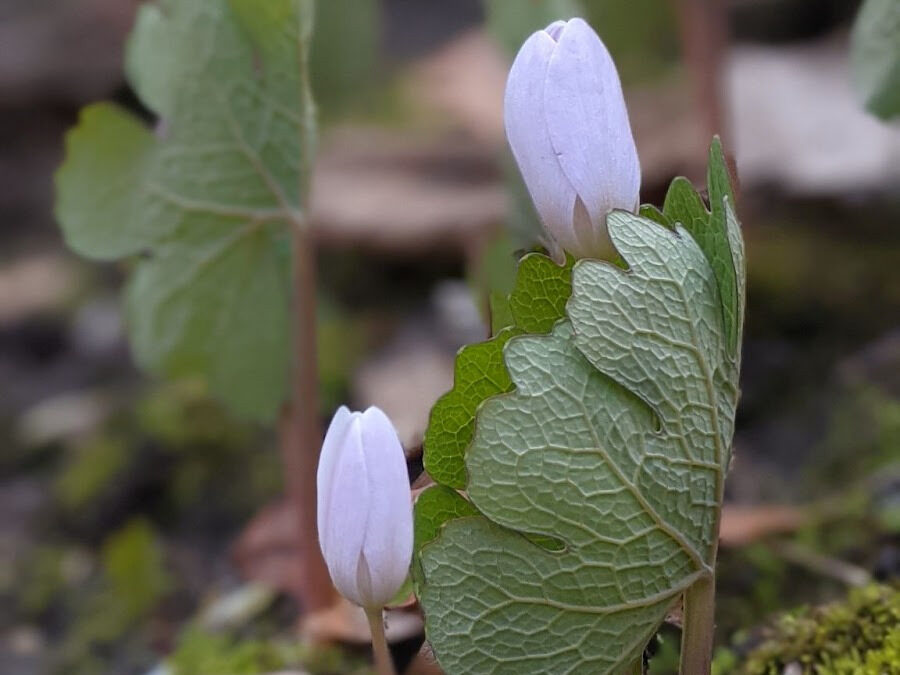
Sharp-lobed hepatica (Hepatica acutiloba) blooms bolting up through oak leaves. Courtesy of Becca Tucker.
What to look (and listen) for to experience nature coming back to life in our parks, backyards and sky.
By Becca Tucker | Volunteer contributor, ecologist & Roseville resident
Minnesota’s distinct winters offer plenty of opportunities to enjoy the season, from brisk walks around the neighborhood to see (or shovel) fresh snow to watching or participating in winter sports. By the end of March, however, many folks are looking for more life and rejuvenation to brighten their daily lives.
As we approach this dynamic transition in 2026, here are the signs of spring to look for in Roseville’s natural spaces.
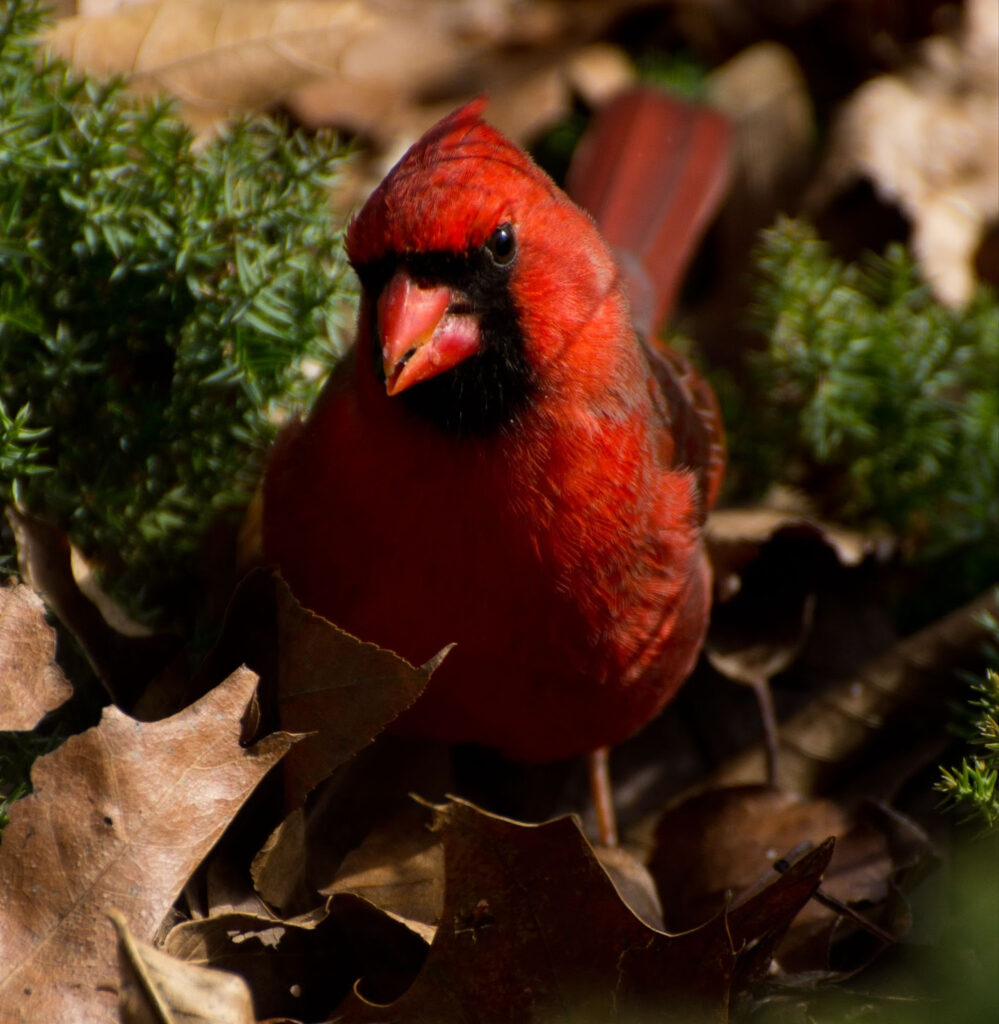
One of the first signs of spring you might not actually see, but hear. Many birds migrate south for the winter and make their way back north with the seasons. Others that stay here all winter have songs that they sing only as spring and mating season starts. This means that the general sound of the spring is a lot more diverse than winter. Bright red cardinals flash between trees and dull goldfinches return and change into their brighter yellow feathers, both hopping around with chipper calls. Even robins, a constant sight throughout the winter, turn to a tune that sounds like “cheerily, cheer up, cheer up, cheerily, cheer up” in spring.
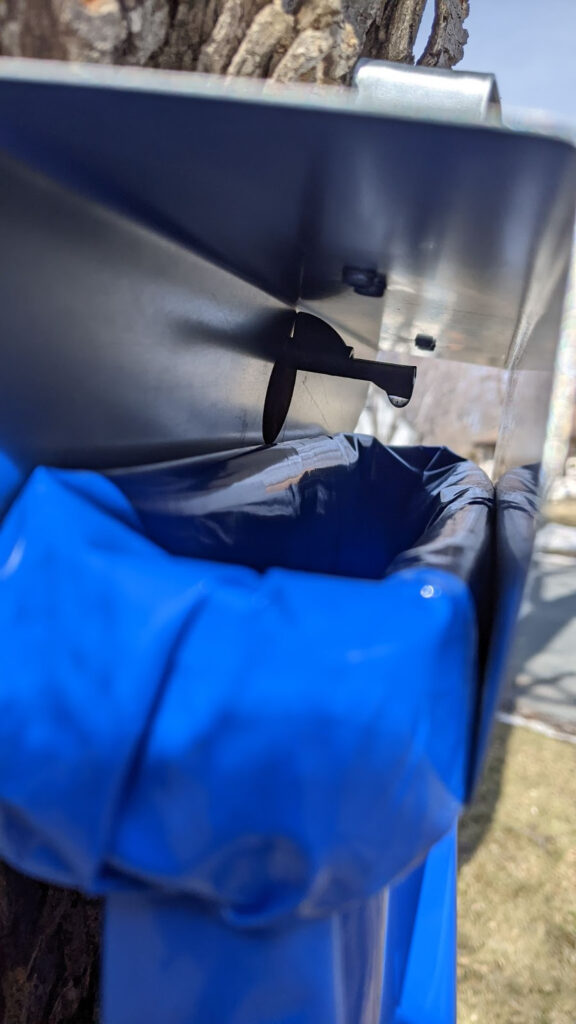
The next change will be with the trees. Early spring brings temperature shifts, causing the ground to start thawing and the sap in trees begin to flow again. Places like the Harriet Alexander Nature Center (HANC) tap trees and collect sap to turn into maple syrup.
If you look closely at trees in your neighborhood, you might see some “weeping” sap directly out of their trunks. Maples are great examples of this. Weeping shows that life blood moving again from roots to buds as they start to develop young leaves on the ends of their branches.
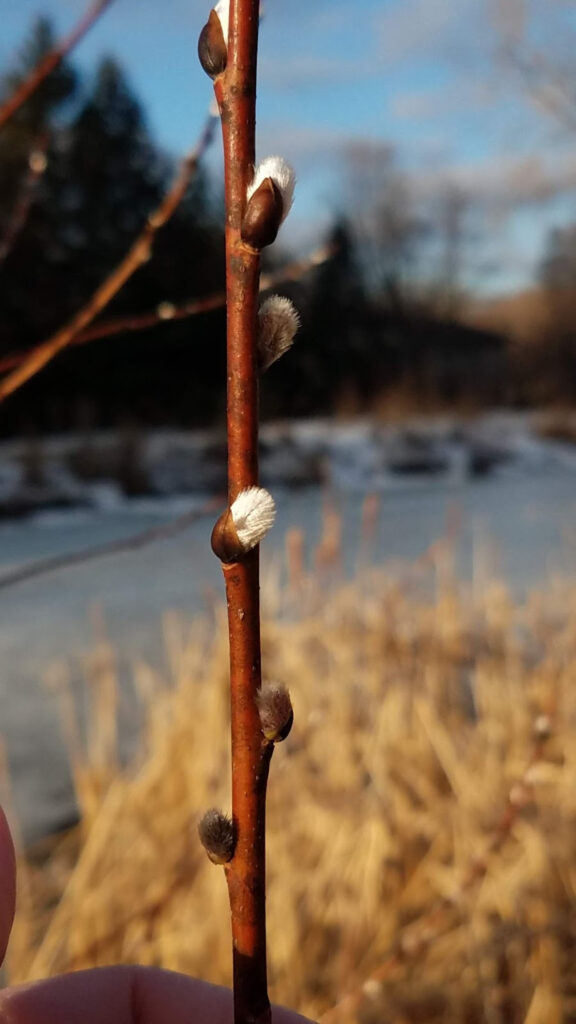
Willows and other water adjacent shrubs, like those that can be seen around the boardwalks at the HANC, start to produce “catkins,” fuzzy, pollen-producing flower clusters that are bright white and offer some of the earliest food of the year for pollinating insects.
Once the ground thaws, we then get the return of green growing native plants. Really, these plants have been here the whole winter, waiting underground to germinate and spring back into action. Some of the first plants to be seen go through their full life cycle are called “spring ephemerals.” This means they grow fast and quick early in the year, flower and die back or produce seeds to wait for the next spring to grow. These may start as delicate leaves sprouting from the ground, but soon bolt flowers of all colors and shapes.
Great examples of these you can see in Roseville are bloodroot, Dutchman’s breeches, pasqueflower, hepatica, bright yellow marsh marigolds and a whole lot more.
City parks and neighborhood yards will start greening up as well with cultivated early flowers like daffodils, tulips and crocuses, adding a rainbow of petals to the revitalizing green of the native and lawn grasses.
Regardless of where you are in the city, there will always be new things to see, hear and learn as winter turns to spring. Get outside if you can, or even enjoy the opening of a window. Bird song and frog calls can be carried inside and new leaves can be seen fluttering in the wind. Connect with the spring in whatever way brings joy and brightness to your day, even if it’s just for five minutes.
Here’s a list of natural areas around Roseville as well as resources to learn more about these signs of spring:
- Minnesota bird calls interactive guide (Minnesota Conservation Volunteer)
- Robin sounds throughout the year (All About Birds by Cornell Lab)
- A Prelude to Spring: The Pussy Willow (University of Minnesota Landscape Arboretum)
- Minnesota native spring ephemeral plants (UMN Landscape Arboretum)
- Monthly blooming guide for native plants (Minnesota Wildflowers)









Fascinating article! Now I will know more of what to watch for. Thanks!
Glad you liked it! 🙂 ~Sommer the Editor