


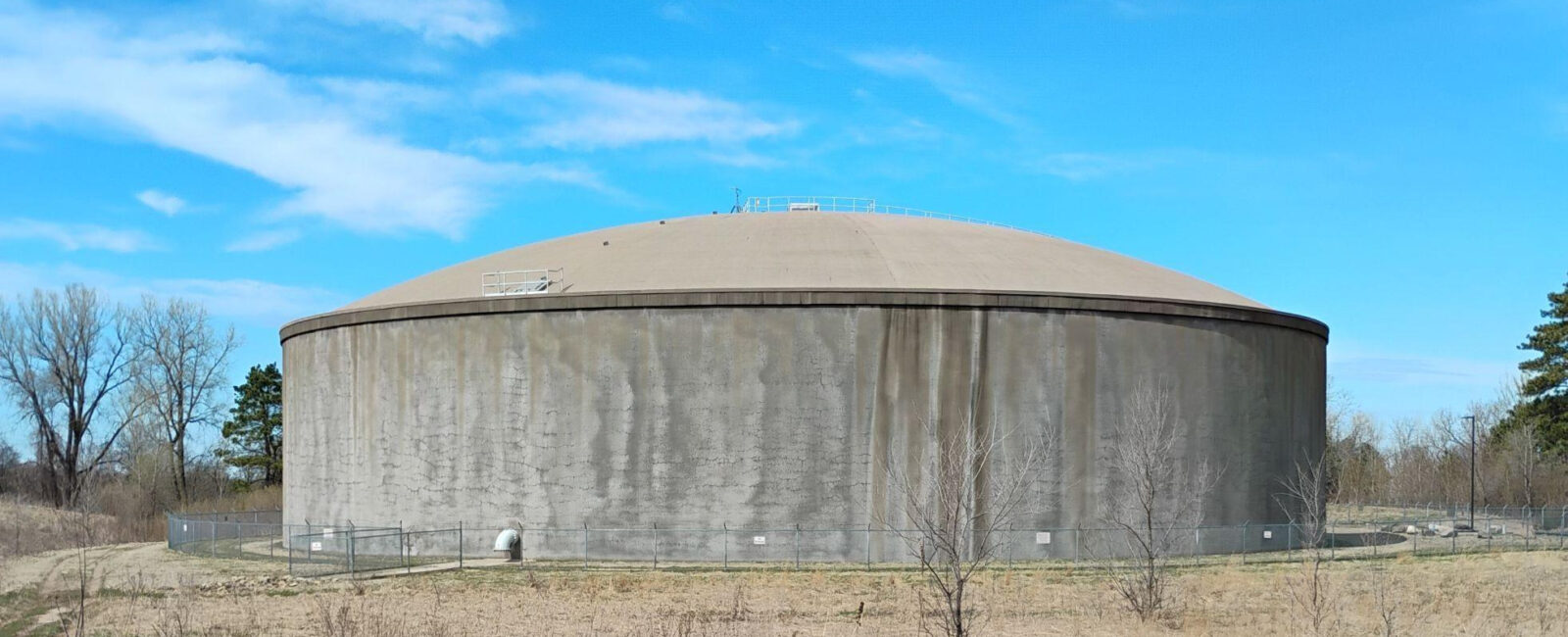
The City of Roseville’s current reservoir stands by Reservoir Woods Park, the former site of the historic Dale Street Reservoir. Nancy Sonmore/The Roseville Reporter
The story behind Roseville’s 30 million gallon dinosaur and how the city gets its water
By Nancy Sonmore — Volunteer contributor
Have you ever wondered where the water in your home comes from?
It comes from the Roseville Reservoir. This gigantic container stores enough water for all of us to cook and shower with and drink. It holds 10 million gallons of water, enough to accommodate the average household use of about 150 gallons of water per day.
Let’s take a deeper look at the Reservoir’s history.
Open-air origins
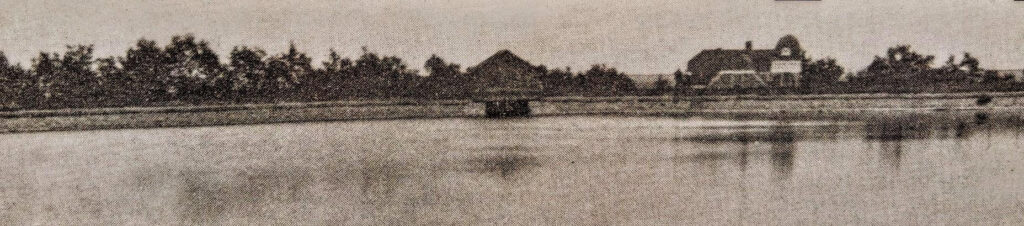
Our watery tale begins in the late 1800s. St. Paul’s water was supplied by Lake Phalen, Vadnais Lake and overflow from Bald Eagle Lake. Roseville’s (then Rose Township’s) share of this water was stored in a 16 million gallon open-air reservoir. This site, now part of Reservoir Woods Park, was located at the highest point northwest of Larpenteur Avenue and Dale Street. Massive amounts of dirt had been shipped in by a special railroad and fashioned into a gigantic mound for the reservoir. This facility was lined with stone blocks, some of which are still visible today.
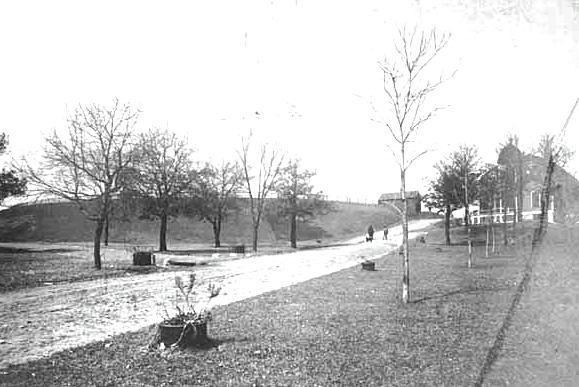
By the turn of the 20th century, St. Paul had grown more than 400% with no end in sight. In turn, water demand began to outgrow the city’s lake water reserves.
The practice of sanitizing water with chlorination also began, which was difficult to control using an open lake source. Roseville city planners decided to prepare for this seemingly endless growth by constructing a massive enclosed water storage facility. This became known as the Dale Street Reservoir.
A whopping $250,000 (the equivalent of $4.72 million today) was budgeted to build the vast covered concrete basin.
The water capacity of the newly-designed concrete reservoir: 30 million gallons!
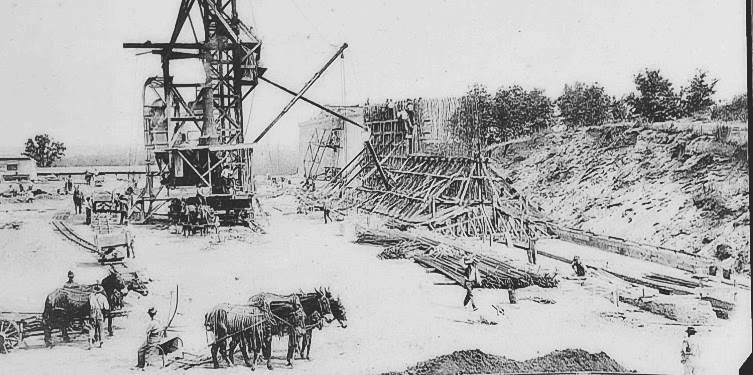
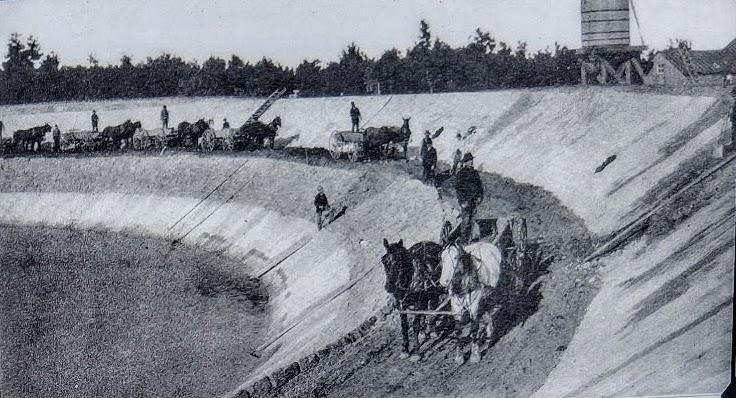
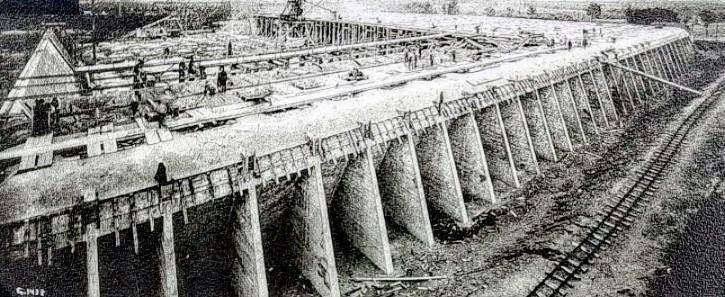
A few amazing facts
- Excavation of the 30-foot-deep, 5-acre site was done entirely with horse teams.
- One million pounds of reinforcing steeI and enough concrete to fill six Olympic-sized swimming pools was used in the Reservoir’s construction.
- Lest we think the concept of “repurposing” is something new: The old open air reservoir was eventually drained and turned into a pistol range for the St. Paul Police Department.
The Reservoir project finally wrapped up in 1919. Much to the city planners’ dismay, the final price tag for the new water facility was twice as much as originally allocated— equivalent to over $9 million today!
Over time, St. Paul’s growth rate decelerated. New methods for storing and supplying water developed, and overall water usage gradually declined. By the 1960s, the now-oversized Dale Street Reservoir was only used by Roseville. The former water storage marvel became a 30-million-gallon relic in a world of smaller models. The cost of repairs and maintenance also became prohibitive.
A decision was eventually made to drain the Reservoir and replace it with a smaller facility. Roseville’s giant reservoir was taken out of service in 2009, laid to rest after 92 years of service.
Demolition and transformation
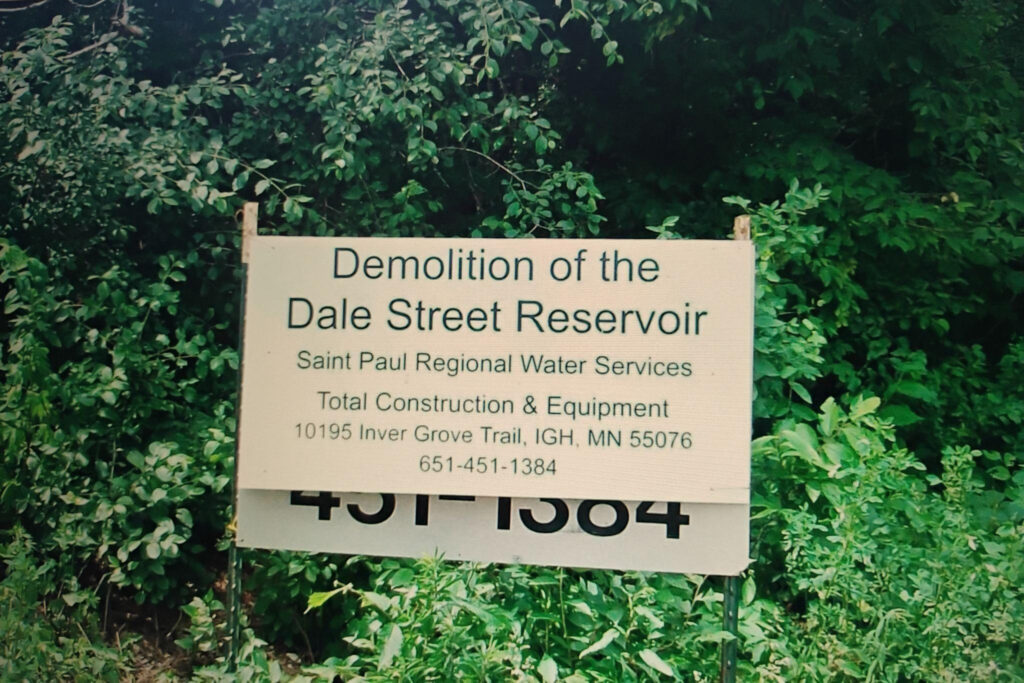
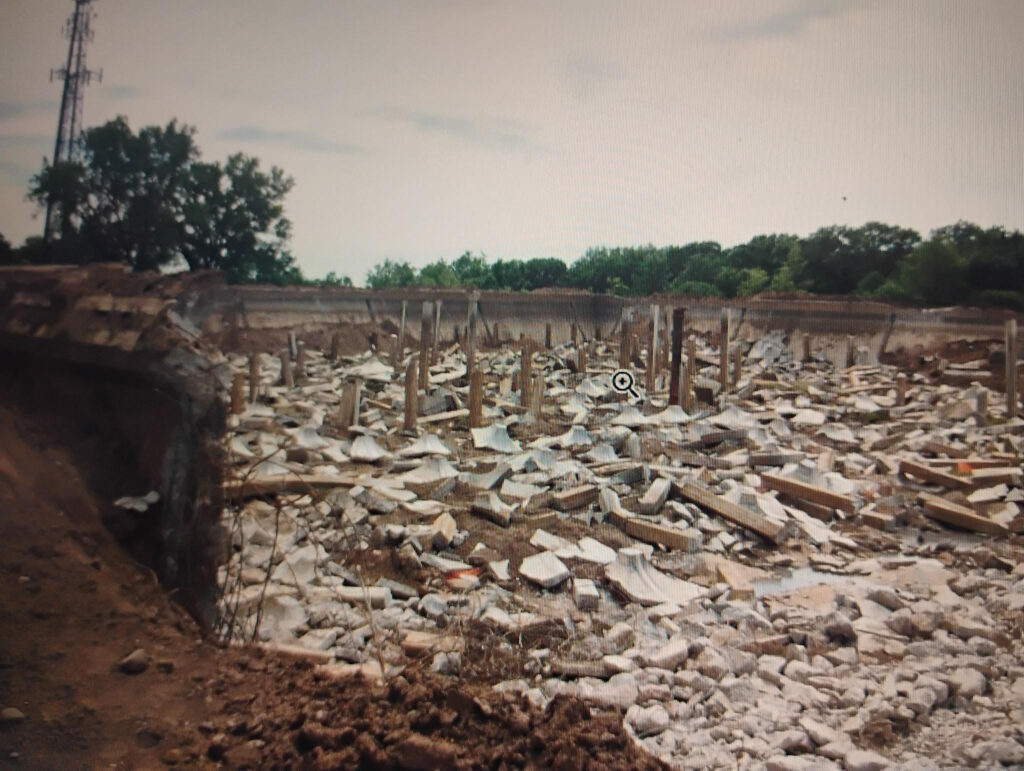
Demolition of the Reservoir began in 2010, and it was not a gentle process. Razing began with a giant wrecking ball smashing through its cast-concrete ceiling. Over the next several weeks, the Reservoir’s roof, interior columns and walls were destroyed. Imagine the daily cacophony of noise resonating throughout nearby neighborhoods!
The resulting rubble was crushed and layered on site. This created a 5-feet-thick base for the new reservoir.
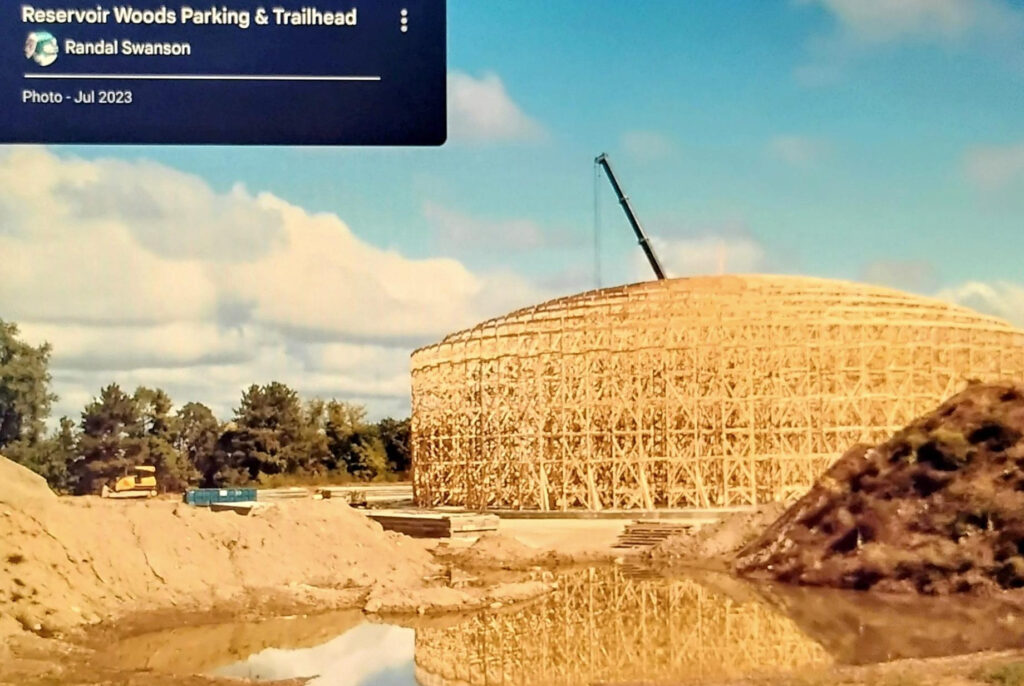
Roseville’s current reservoir, operational since 2012, is a 45 feet tall domed concrete cylinder. It holds 10 million gallons of water, 20 million gallons less than its predecessor. The water tank is 40 feet deep and stands about 18 feet higher than the previous reservoir.
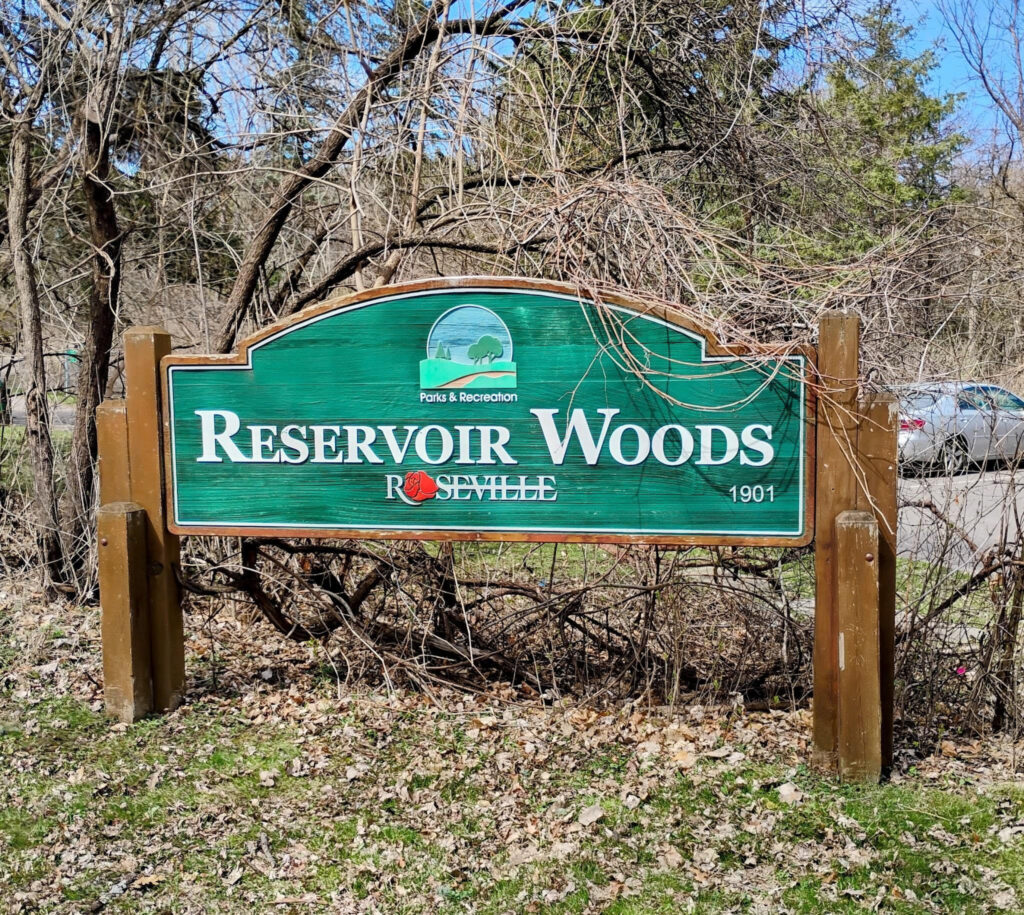
In 1997, Roseville purchased the old open reservoir site and its surrounding land from the City of St. Paul. Leased acreage from Roselawn Cemetery was added to form our 120-acre Reservoir Woods Park.
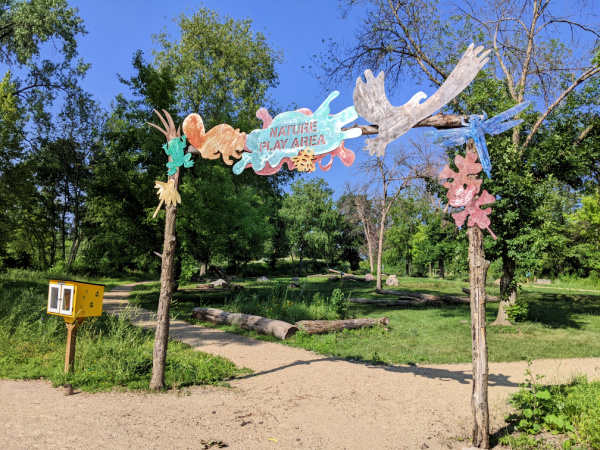
With focus on restoring its prairies and woodlands, the park features mature oak forests, wetlands and Minnesota’s largest butternut tree (76 feet tall, 19 feet in circumference!) The largely undeveloped woods are home to hawks, owls, ducks, deer, coyote and a wide variety of songbirds. A paved trail winds through and many other natural paths invite visitors to explore this hidden gem. There is even a 5-acre dog park with separate areas for small and large dogs.
So get out and explore our incredible hidden nature park— and don’t forget to sneak a peak at the reservoir!