



Key results affecting Roseville residents involve immigrant healthcare, data centers and local park improvements
by Sommer Wagen
From the special session passage of a new $66 billion state budget to the killings of Minnesota House Speaker Melissa Hortman and her husband that made national headlines, the state has needed time to recover from the chaos that punctuated the 2025 legislative session.
Still, a litany of changes was made that will affect Minnesotans in Roseville and beyond. Here are three takeaways the Roseville Reporter sifted from the chaos.
MinnesotaCare coverage repealed for undocumented immigrants
Perhaps the most controversial measure from this year’s session strips undocumented immigrants ages 18 and older of healthcare coverage via MinnesotaCare, Minnesota’s state health insurance.
MN HF1 freezes MNCare coverage to undocumented immigrants already enrolled in the program, but starting Jan. 1, 2026, they will become ineligible and lose their coverage.
As reported in the Sahan Journal, as many as 15,000 people could lose coverage, according to the state Department of Human Services.
According to the American Immigration Council, there are 80,400 undocumented immigrants in the state of Minnesota. Immigrants, regardless of status, make up 10.4% of the Twin Cities metro population, according to the Council.
“I will never forget the sound of the] Minnesota Republican House caucus cheering at the news of undocumented Minnesotans losing access to healthcare,” Representative Leigh Finke, who represents Roseville and voted against the bill, wrote in a BlueSky post. “They do not care about our lives. Those are the stakes for our communities.”
District 40B Representative David Gottfried and State Senator Clare Oumou Verbeten, both DFL, also voted against the bill.
Environmental regulations for data centers
MN HF16 defines a data center as “a facility that is designed to have a load of 100 megawatts or more and whose primary purpose is the storage, management, and processing of digital data.” The bill introduces regulations for data centers that focus on the environment, energy use and economic development.
Among these regulations are mandating sustainable design certifications and an optional clean energy tariff for commercial and industrial customers.
It also creates the new category of “qualified large-scale data centers” that comprise at least 25,000 square feet across one or multiple locations with construction costs of at least $250 million.
For large-scale centers, the bill implements an annual fee structure based on peak electrical demand, with funds going to energy conservation efforts.
The closest data centers to Roseville are ABcom, located west of Roseville Auto Body across I-35, and the Cogent Data Center in the Payne-Phalen neighborhood of St. Paul.
The Midwest, and Minnesota in particular, are seeing a data center boom due to its cooler temperatures and abundant water used to cool the centers down.
Proponents of the bill have said data centers will create thousands of new jobs in Minnesota, while those against raise concerns about water usage and giving tax breaks to large tech companies, according to the Minnesota House website.
Representative Finke and Senator Oumou Verbeten voted against the bill, while Representative Gottfried voted in favor.
Legacy finance bill funds Keller Park tuj lub courts
Just 10 minutes away from Roseville in Maplewood, Minn. is Keller Regional Park, home of three courts dedicated to tuj lub (pronounced “too-loo”), a traditional Hmong sport.
The legacy finance bill, MN HF2563, grants Ramsey County $500,000 to enhance these courts, among other appropriations from outdoor heritage, clean water, parks and trails and arts and cultural heritage funds.
Generally translated to “spin top,” tuj lub is a 5,000-year-old sport that involves two teams of six players trying to hit each other’s tops tied to the end of two-foot-long wooden sticks. Per the Ramsey County website, the sport “embodies a fusion of skill, strategy, and community spirit.”
The Keller Park courts first opened in June 2017 and include informational signs describing the rules for newcomers.
A detailed breakdown of the state budget can be found on the League of Minnesota Cities’ website.
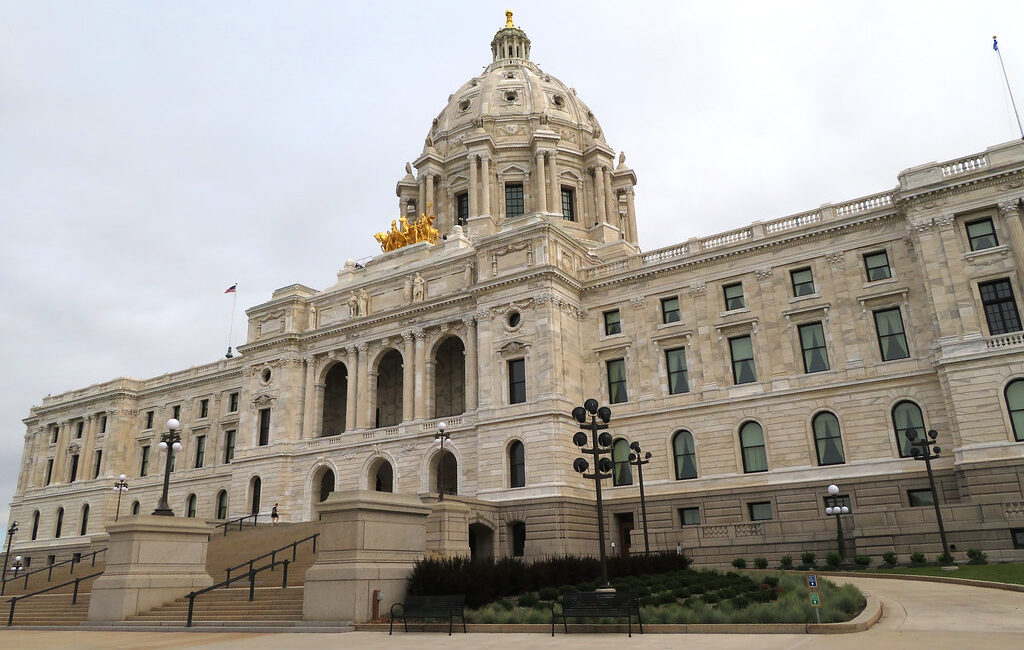
Photo credit: The Minnesota State Capitol building in St. Paul. Photo courtesy of Flickr.