


By Chidozie Osuji
When Bill Doherty started the organization Braver Angels, he intended to help improve the enduring problem of political polarization among communities in the United States.
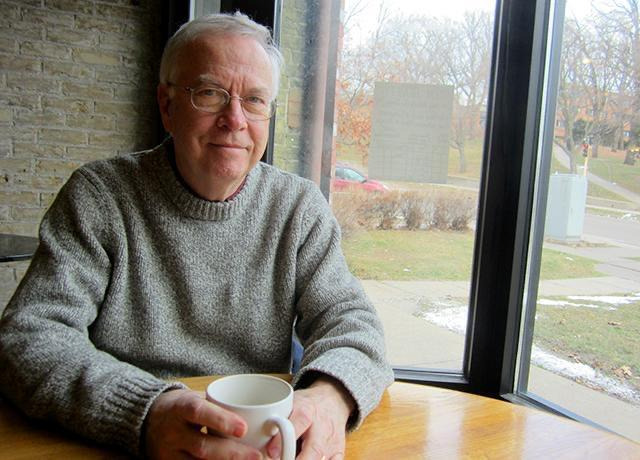
Doherty, 80, came to Minnesota for a teaching position at the University of Minnesota in 1986. For years, he worked in family therapy, working with couples on the brink of divorce, which helped him develop a skill set for working with people who had serious conflicts.
Then, a week after the 2016 election, his colleague invited him to facilitate a workshop between 10 Democrats and 10 Republicans in southwest Ohio. The goal of this workshop was to have the participants speak and actively listen to each other’s emotions.
“It was very successful,” Doherty said. “That’s how it got started, not with a systematic plan, but with an opportunity to try something that worked and [keep] going.”
That experience inspired Doherty to co-found Braver Angels in 2017. Since then, the movement has grown across all 50 states. The organization runs structured red/blue workshops, community debates and college programs that help people disagree better.
“But my strength and I saw there was a big need to engage one another as regular people,” he said.
Much of that work has been in the local community. Doherty has led numerous Braver Angels workshops in Roseville, calling the city a “testing ground” for new ideas.
“We have about ten different kinds of workshops in Braver Angels, and Roseville has been the place where I’ve developed many of them,” he said.
Partnering with the Do Good Roseville nonprofit and using local libraries as gathering spaces, Doherty has turned his hometown into a model for how communities can learn to bridge divides face-to-face.
One of their most popular programs, the Red/Blue Workshop, brings conservatives and liberals together for structured conversations aimed at listening, not arguing.
“We call them Red/Blue workshops,” Doherty said. “They’re carefully structured; we don’t just turn people loose on each other.”
One exercise, called the “fishbowl,” places one group in the center of a circle to discuss their values while the opposite group listens from the outside. Participants answer two questions: why their side’s values are good for the country, and what concerns they have about their own side, a prompt Doherty calls the “humility question.” Afterward, the groups switch roles and reflect together on what they learned and what they share in common.
The organization’s name also carries deep meaning. Originally called Better Angels, the group took inspiration from Abraham Lincoln’s first inaugural address, where he urged Americans to let “the better angels of our nature” guide them to unity on the eve of the Civil War. When another organization claimed the trademark, Doherty and his team changed the name to Braver Angels, but it’s a shift he now embraces.
“Courage is essential right now,” he said. “We’re emphasizing courageous citizenship, to form relationships across the divide, to work together across the divide, and so ‘braver’ really connotes that, so I’m happy with it.”
Despite the organization’s growth, Doherty acknowledges that the work is challenging. Recruiting conservatives can be difficult, and the group has faced criticism from those who argue that dialogue may normalize harmful viewpoints.
In Doherty’s view, however, having a conversation is not the same as endorsement.
“Some think our goal is to get people closer to the political middle, which is not what we are about,” he said. “We believe it’s important that around these issues of political polarization, people can disagree with respect and hold on to their relationships.”
Since 2017, Bill has been doing interviews with Minnesota Public Radio on Braver Angels topics, and in 2024, the organization collaborated with MPR on “Talking Sense,” a project that invites Minnesotans to practice “disagreeing better” through public conversations and local dialogues that model what civil disagreement can look like.
“They had gotten funding to do a year-long project of helping Minnesotans deal better with conflict,” Doherty said. “So we did workshops that they recorded, we did interviews with families and developed curricular materials for their website. It was a really good partnership, and it began with them approaching us.”
For Doherty, the drive to continue this work comes from a deep sense of duty to his country and community.
“I care about my country, I care about my community, I care about families,” he said. “We have a serious problem that I happen to have some knowledge and skill to help with.”
Doherty hopes the next decade will bring a new kind of citizenship, one grounded in courage, respect and collaboration. He envisions Braver Angels as part of a growing movement to rebuild and reshape the country’s political culture.
“We need a movement of engaged, courageous citizens who can take back our country from this polarization,” he said. “We have to learn to disagree better and with respect, so we can solve problems together instead of just dividing and fighting. Ten years from now, I hope we’ll have made real progress toward that norm.”









Thank you for this great article! I have been to a few of these session in town and it is such important work. Thanks for brining it to folks attention! I appreciate this new publication.
Fantastic! I love this idea 🙂